
 Deutsch
 Español
 Français
 Nederlands
 Português
 Русский
 日本語
日本語 Bahasa Indonesia
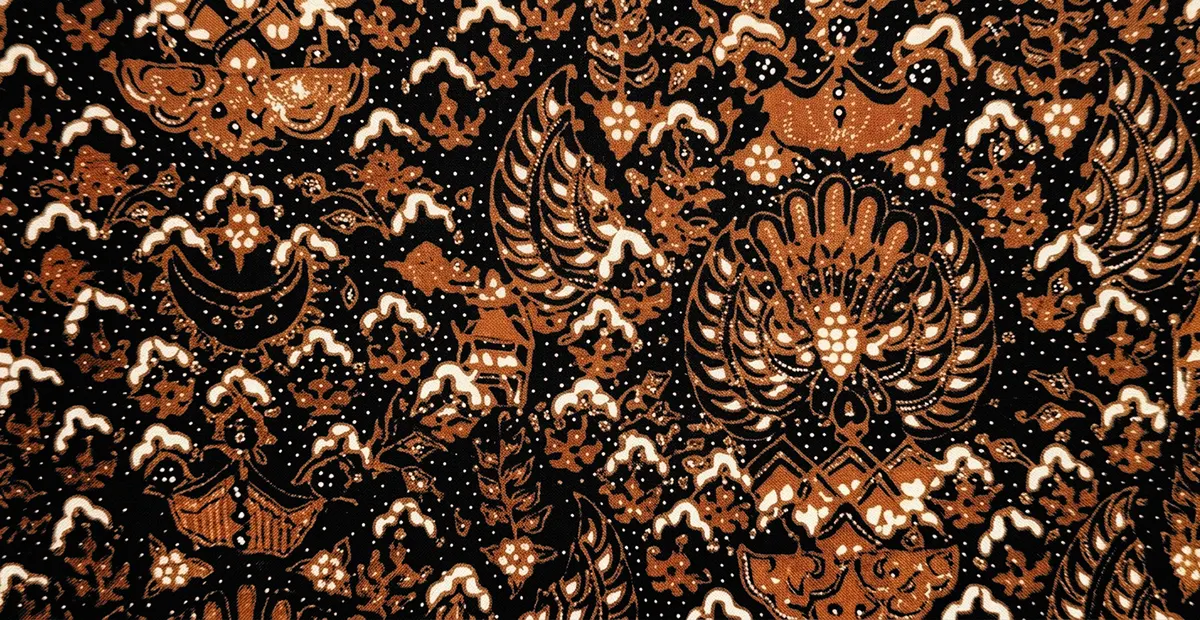
Batik Cuwiri is a revered textile design originating from the royal courts of Surakarta and Yogyakarta in Central Java. Derived from the Javanese word meaning small or finely detailed, this intricate pattern belongs to the oldest families of classical Javanese batik patterns. Characterized by repeating mountain peaks, mythical bird wings, and fine dot work set against warm earthy tones, the textile serves as a visual prayer for social harmony, moral grace, and lifelong prosperity.
What is Batik Cuwiri? Etymology and Royal Origins
Understanding the cultural depth of Indonesian heritage textiles requires looking closely at how language and artistry intersect. Unlike purely decorative modern prints, every line and dot in court-era Javanese textiles carries specific intentions passed down through generations of master artisans.
The Meaning of Cuwiri in Javanese Culture
When exploring Batik Cuwiri meaning and philosophy, the linguistic root provides the clearest starting point. In traditional Javanese terminology, the word cuwiri translates to small, petite, or finely proportioned. This name directly reflects the compact visual scale of the repeating ornaments across the cloth.
Philosophically, the dense and meticulous arrangement teaches that greatness in human character is built from small, consistent acts of virtue. In Javanese society, wearing this motif represents a hope that the wearer will always be viewed with respect, carry themselves with humility, and abide by noble eastern traditions from infancy through adulthood.
Historical Roots in the Royal Courts of Java
Historically, this design developed within the cultural sphere of the Mataram Sultanate, eventually branching into subtle stylistic variations between the palaces of Yogyakarta and Surakarta (Solo). Within the palace walls, artisans created the pattern using natural tree bark dyes that yielded deep, meditative shades of brown. Over centuries, while certain court patterns remained strictly forbidden for commoners, Cuwiri transitioned into a cherished ceremonial cloth used by Javanese families during pivotal life-cycle rituals. For global recognition of how deeply these traditions are woven into daily life, UNESCO’s Representative List of the Intangible Cultural Heritage of Humanity highlights the profound symbolic role of batik from birth to marriage.
Visual Anatomy of the Batik Cuwiri Motif
| Motif Element | Visual Characteristics | Philosophical Symbolism |
| Meru (Sacred Mountain) | Symmetrical, tiered peak formations anchored across the cloth | Spiritual grounding, stability, and harmony between earth and heaven |
| Garuda or Lar (Wings) | Curved, feathered wing spreads flanking the central mountain core | Protection, endurance, virility, and noble leadership |
| Cecek (Fine Dots) | Hundreds of micro-dots outlining and filling the main contours | Patience, precision, and the interconnectedness of community life |
| Sogan & Black Palette | Classic sogan brown motif fills set against a true black background with cream dots | Humility, ancestral connection, and timeless earthly elegance |
The interplay of Meru and Garuda batik elements forms the unmistakable backbone of this design. In Hindu-Javanese cosmology, Mount Meru represents the sacred axis of the universe and the dwelling place of the gods. Flanking or crowning these mountain shapes are the stylized wings of the Garuda, the mythical mount of Lord Vishnu, which adds a dynamic, protective energy to the calm geometry of the mountains. Surrounding these primary shapes are delicate floral tendrils and dense clusters of fine white dots known as cecek, which prevent the dark background from feeling heavy.
Sacred Cultural Functions: From Mitoni to Kain Gendongan
In traditional Javanese customs, textiles are not merely garments; they are spiritual vessels that accompany human milestones.
The Seven-Month Pregnancy Ritual (Upacara Mitoni)
The most famous cultural application of this motif occurs during Mitoni (also known as Tingkeban), a sacred ceremony held during the seventh month of a mother’s first pregnancy. During the pantes-pantes procession, the expectant mother is wrapped in seven consecutive layers of classical textiles, alongside other revered patterns such as Batik Sido Luhur and Batik Sido Mulyo.
Batik Cuwiri plays a central role in this sequence. Wrapping the mother in this specific cloth symbolizes the family’s prayer that the unborn child will grow into a person of natural grace, attract goodwill wherever they go, and live a life free from scarcity.
Kemben and Traditional Baby Slings
Beyond prenatal ceremonies, the fabric is traditionally worn as a kemben (a classical torso wrap for women) during royal and community festivities. Furthermore, Javanese mothers frequently use a long rectangular strip of this pattern as a kain gendongan (traditional baby sling). Carrying an infant inside a cloth adorned with Meru and Garuda motifs is believed to metaphorically cradle the child in parental blessings, protection, and harmony.
Inside the Workshop: How Authentic Batik Cuwiri is Crafted
Producing a true Javanese heritage textile requires decades of inherited technical mastery. In our Pekalongan family workshop, which has been crafting traditional textiles since my grandfather established our foundational dye houses in the 1930s, patterns with micro-details like Cuwiri demand the highest level of artisan concentration.
Hand-Drawn (Batik Tulis) vs. Copper Stamp (Batik Cap) Techniques
Because the essence of Cuwiri lies in its small, densely packed geometry, applying hot liquid wax (malam) to the fabric is a delicate operation.
In the hand-drawn (batik tulis) method, an artisan uses a bamboo-handled铜 spout tool called a canting to draw the Meru outlines first, followed by a finer-spouted canting to place thousands of individual wax dots by hand. A single two-meter length of tulis fabric can take several weeks to complete.
For makers and designers seeking consistent pattern repeatability for apparel or quilting, our artisans utilize the hand-stamped (batik cap) method. Master metalsmiths solder thin strips of pure copper and fine wire pins into a heavy block stamp. The artisan dips this copper stamp into a heated pan of beeswax, paraffin, and pine resin, pressing it onto the cloth with steady, calibrated pressure so the fine dots neither blur nor crack prematurely.
Mastering the Traditional Sogan Dyeing Process
Creating a traditional Sogan batik fabric involves multi-stage manual immersion dyeing. First, the areas meant to remain crisp white or warm cream—such as the tiny cecek dots and outer wing highlights—are sealed under hot wax. The cloth then undergoes traditional sogan brown dye baths to color the interior details of the wings and mountain tiers.
Finally, those brown motif elements are protected with wax while the fabric is immersed by hand into deep vats to achieve a true black background. Because the dyeing is performed entirely by hand, the black ground carries a rich, organic depth that subtly interacts with the warm sogan brown motifs under studio lighting.
Modern Applications for Quilters, Designers, and Collectors
While deeply rooted in ancient Javanese ceremony, the visual structure of this motif makes it remarkably versatile for contemporary textile arts.
Why Micro-Scale Patterns Excel in Patchwork and Quilting
For quilters and patchwork artists in the United States and worldwide, scale is everything. Large-scale motifs often lose their recognizable structure when rotary-cut into two-inch or four-inch quilt blocks. Because Batik Cuwiri is inherently designed with a compact, small-scale repeating geometry, it functions exceptionally well as both a focal heritage print and a textural blender.
When crafted on authentic Indonesian wax-resist cotton with a high thread count, the fabric offers minimal fraying at the seam allowances, crisp pressing capabilities, and rich organic depth that flat screen-printed fabrics cannot replicate.
Resort Wear, Structured Apparel, and Heritage Home Decor
In ethical fashion and interior design, the warm sogan palette serves as a sophisticated neutral. Boutique apparel designers frequently incorporate the pattern into structured men’s dress shirts, tailored blazers, and resort wear blouses. In home interiors, the symmetrical balance of the mountain and wing elements brings grounded warmth to table runners, accent throw pillows, and framed textile wall art.
How to Identify and Care for Genuine Batik Cuwiri Fabric
When sourcing textiles for heirloom projects or retail collections, distinguishing genuine wax-resist fabric from factory-printed imitations is essential:
Check both sides of the cloth: Genuine hand-stamped and hand-drawn batik absorbs dye completely through the fibers, resulting in 95% to 100% color and pattern clarity on the reverse side.
Inspect the dot work: Look closely at the fine white dots and brown fills. Authentic wax-resist textiles show slight, organic variations in dot size and occasional microscopic wax crackle veins, whereas machine prints appear flat and mechanically uniform.
Feel the cotton base: True artisan batik uses tightly woven, breathable 100% mercerized cotton (such as Primisima or high-grade Prima) or fluid rayon that feels cool against the skin.
To preserve the richness of the sogan dyes for decades, wash the fabric gently by hand in cool water using a mild, pH-neutral detergent. Avoid bleach or harsh optical brighteners, and always hang the textile to dry in a shaded, well-ventilated area away from direct midday sunlight.
Frequently Asked Questions About Batik Cuwiri
What is Batik Cuwiri and what does the motif mean?
Batik Cuwiri is a classical Javanese textile pattern originating from the royal courts of Central Java. The word “cuwiri” translates to small or finely detailed, reflecting its intricate, compact geometry. Philosophically, the motif symbolizes moral grace, social harmony, respectability, and lifelong prosperity for the wearer.
Why is Batik Cuwiri worn during the Javanese Mitoni pregnancy ceremony?
During the seven-month pregnancy ritual known as Mitoni or Tingkeban, the expectant mother wears Batik Cuwiri as part of a seven-cloth ceremonial wrapping. Families choose this specific motif as a sacred prayer that the unborn child will grow up with noble character, attract kindness from society, and enjoy a prosperous life.
What are the main visual elements inside a Batik Cuwiri pattern? The visual anatomy of Batik Cuwiri centers on two sacred symbols: Mount Meru (tiered mountain peaks representing stability and spiritual grounding) and Garuda or Lar (stylized mythical bird wings symbolizing protection and endurance). These primary shapes are accented by fine floral vines and dense clusters of tiny white dots called cecek.
Is Batik Cuwiri considered a forbidden (Batik Larangan) royal pattern? Although Batik Cuwiri developed within the palaces of Yogyakarta and Surakarta and features royal Garuda wing and Meru elements, it is not strictly restricted to royalty today. It is openly cherished across Javanese communities for traditional ceremonies, formal attire, and heritage baby slings (kain gendongan).
What gives traditional Batik Cuwiri its brown and black Sogan color? Authentic Batik Cuwiri features the classical Sogan color palette, combining warm earthy browns, terracotta, deep indigo-black, and cream. Historically extracted from the bark of the Soga tree, these colors represent humility, ancestral wisdom, and humanity’s connection to the earth.
Why is Batik Cuwiri cotton ideal for quilting and patchwork projects? Because Batik Cuwiri is designed with a small-scale, tightly repeating geometric layout, the pattern remains visually balanced even when cut into small two-inch or four-inch quilt blocks. Crafted on high-thread-count 100% wax-resist cotton, it resists fraying, presses crisply, and offers reversible color depth.
How can you tell if a Batik Cuwiri fabric is authentic wax-resist or machine printed? Genuine wax-resist Batik Cuwiri shows 95% to 100% color and pattern clarity on both the front and back of the cloth because the fabric is fully immersed in dye vats. Additionally, authentic pieces exhibit subtle, organic variations in the tiny cecek dots, whereas factory screen prints have a faded white reverse side and mechanical uniformity.
