
 Deutsch
 Español
 Français
 Nederlands
 Português
 Русский
 日本語
日本語 Bahasa Indonesia
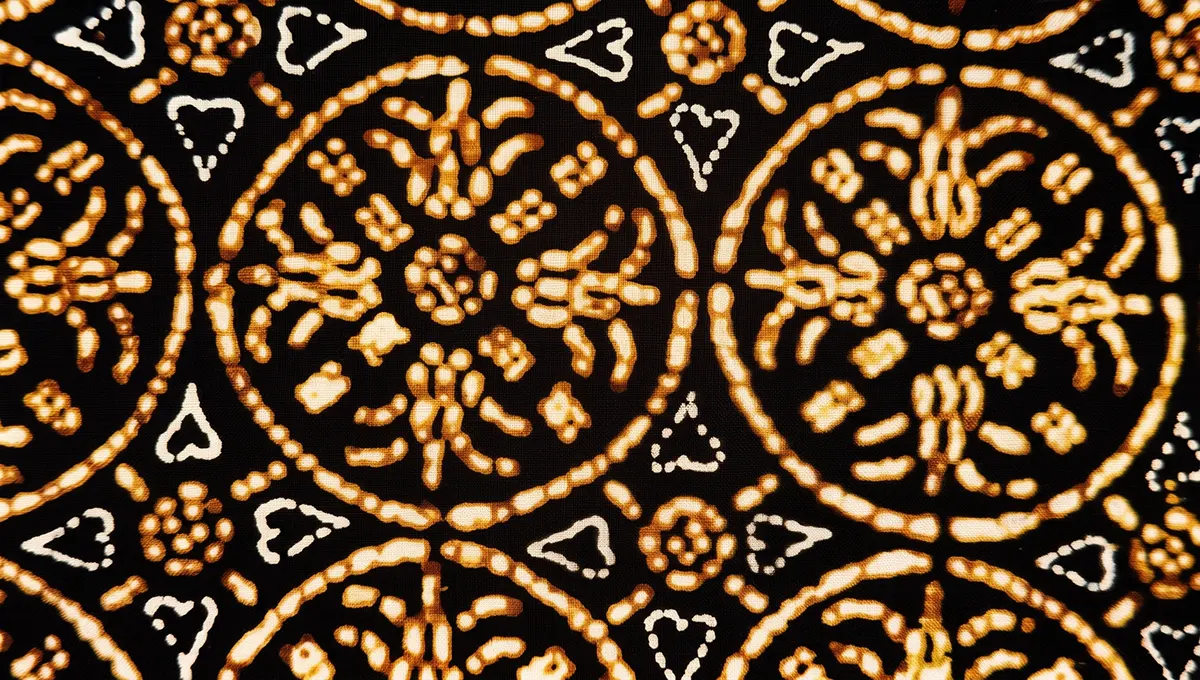
The Batik Cakar Ayam motif is one of Indonesia’s most meaningful classical textile designs, celebrated for its intricate geometry and profound cultural symbolism. Translating literally to “chicken claw” in Indonesian, this traditional pattern draws inspiration from the daily rhythm of rural Javanese life, specifically the sight of a mother hen scratching the earth at dawn to feed her chicks. For centuries, Javanese royalty, elders, and master textile artisans have preserved this pattern not merely as a decorative cloth, but as a wearable prayer for diligence, self-reliance, and abundant livelihood.
Whether rendered in flowing circular medallions or composed of thousands of tiny square dots from the royal courts of Yogyakarta, this heritage design bridges ancient philosophy with timeless visual appeal. Today, its high-contrast palette of warm earthy browns, ivory accents, and deep black grounds makes it a sought-after fabric for cultural ceremonies, heirloom garments, and modern quilting projects around the world.
Key Takeaways
Literal Translation: Chicken Claw (Cakar Ayam in Indonesian, Ceker in Javanese).
Core Philosophy: Hard work, financial independence, resilience, and blessed provision.
Main Visual Styles: Circular Ceplok medallion style and Yogyakarta geometric Nitik style.
Ceremonial Role: Traditionally worn during Javanese Siraman (bridal purification) and Mitoni (seven-month pregnancy blessing).
Traditional Color Palette: Earthy soga brown and cream motifs set against a true jet-black background.
What is the Philosophy of the Batik Cakar Ayam Motif?
At the heart of the Javanese chicken claw batik philosophy is the concept of ceker-ceker—the tireless act of scratching the ground to uncover food. In Javanese agrarian wisdom, chickens wake before sunrise to seek sustenance with patience, honesty, and persistence. Wearing this pattern serves as a reminder and a spiritual blessing that human beings must work diligently with their own hands while trusting in divine provision.
Rather than symbolizing aggression, the claw marks represent groundedness and the ability to provide for one’s family regardless of life’s challenges. Because of this nurturing and prosperous message, the fabric plays a central role in Javanese life-cycle rituals.
Significance in Javanese Bridal Ceremonies (Upacara Siraman)
In classical court and village traditions, families carefully select a traditional Javanese wedding siraman batik to wrap around the bride or groom during the pre-wedding purification bath, as well as during the ungkepan (steaming/seclusion) ritual. Parents also frequently wear this pattern while blessing their children. By enveloping the couple in the Cakar Ayam design, parents pass down a unspoken wish: once the bride and groom establish their own household, may they possess the grit, harmony, and financial wisdom to stand on their own feet and earn an honest, prosperous living.
Role in the Seven-Month Pregnancy Ritual (Mitoni or Tingkepan)
During the Mitoni ceremony, which celebrates the seventh month of a mother’s first pregnancy, the expectant mother changes into seven different classical batik cloths. The Cakar Ayam cloth is consistently chosen as one of the valid, virtuous fabrics (kainப்ปantas) for this ritual. Here, the motif acts as a maternal prayer that the unborn child will grow into an independent, resourceful, and hardworking adult who brings fortune to the community.
Two Iconic Visual Variations: Circular Ceplok vs. Yogyakarta Nitik Cakar Ayam
While the underlying philosophy remains unified, Indonesian batik regions and historical lineages have interpreted the chicken claw geometry in two distinct visual traditions.
The Circular Medallion (Ceplok) Cakar Ayam
The circular variation belongs to the Ceplok family of geometric repeating patterns. In this composition, large interlocking circles frame four radiating claw-like clusters that meet around a central floral core. Each claw structure is formed by rhythmic, elongated wax-resist strokes and tiny clusters of four dots, surrounded by delicate white dotted heart and petal filler motifs (isen-isen) positioned in the spaces between the medallions. The organic, slightly varied thickness of the wax lines gives the cloth a warm, rhythmic energy against its solid black base.
(Catatan Penempatan Gambar 2: Masukkan foto HD versi Nitik Jogja di sini dengan Alt Text: Authentic Yogyakarta Batik Nitik Cakar Ayam motif composed of intricate geometric square dots on a solid black hand-dyed fabric)
The Geometric Nitik Cakar Ayam of Yogyakarta
When exploring the Batik Nitik Cakar Ayam meaning, one must look at both its spiritual message and its extraordinary technical origin in Yogyakarta. Historically developed inside the royal palace walls and perfected at the Kembangsongo batik center in Bantul since the reign of Sultan Hamengkubuwono VII over two centuries ago, the Nitik style imitates the visual texture of ancient woven patola and songket textiles using hot liquid wax.
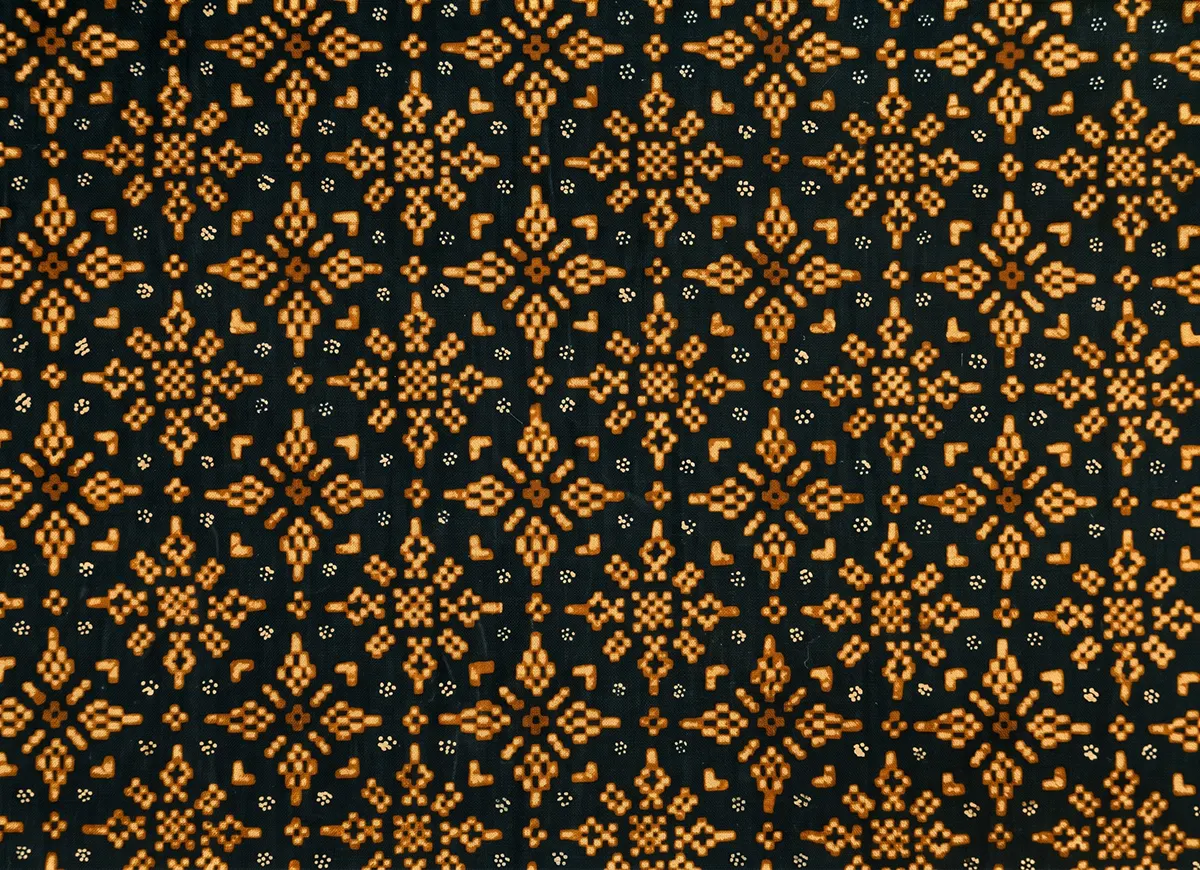
The Yogyakarta Nitik batik geometry does not use curved lines. Instead, the entire fabric is constructed from thousands of tiny, crisp square dots arranged on a diagonal grid. Four spear-like arms of clustered golden-brown dots radiate outward from a checkered center to represent the four directions of a chicken’s foot, framed by small L-shaped corner brackets and tiny four-dot white floral accents across a deep black field.
| Design Attribute | Circular Cakar Ayam (Ceplok Style) | Nitik Cakar Ayam (Yogyakarta Style) |
| Primary Geometry | Interlocking circular medallions with radiating claws | Grid-based four-pointed stars made of micro-dots |
| Secondary Filler Motifs | White dotted hearts, triangles, and small rosettes | L-shaped corner brackets and four-dot white clusters |
| Traditional Waxing Tool | Standard round-spout canting tulis or copper cap | Specialized four-slit canting nitik or fine nitik cap |
| Visual Texture | Organic, bold, flowing dot-and-stroke rhythm | Fine, woven-like pixel geometry |
From Artisan Workshop to Fabric: How Authentic Cakar Ayam Batik is Made
In our family batik workshop in Pekalongan—where we have been crafting traditional textiles across generations since the 1930s—producing an authentic hand-stamped and hand-drawn soga batik fabric requires strict control over wax temperature, tool geometry, and dye chemistry. Understanding how this cloth is made helps collectors and sewists distinguish genuine wax-resist batik from modern machine-printed imitations.
The Secret of the Four-Slit Canting Nitik and Precision Copper Cap
A common question among textile enthusiasts is how artisans achieve the square, pixel-like dots seen in the Nitik variation. If you touch a standard canting tulis (wax pen) to cotton, surface tension naturally creates a round drop. To create the square dots of Nitik Cakar Ayam, artisans use a specialized tool called a canting nitik. The tiny copper spout of this tool is carefully split lengthwise into four crosswise slits. When the artisan taps the spout vertically onto the cloth at a precise 90-degree angle, the wax flows through the four slits to form a miniature square dot rather than a circle.
For full fabric yardage used in garment manufacturing and quilting, master coppersmiths replicate this exact geometry into a heavy hand-welded copper stamp (canting cap). Each tiny square pin on the copper block must be leveled by hand so that when dipped into heated beeswax and paraffin, it transfers crisp, uniform dots onto both sides of the cotton cloth.
Achieving the True Jet-Black Background and Warm Soga Tones
One fascinating characteristic of traditional Cakar Ayam fabric is the interplay between its warm soga brown outlines and its dark background. If you view older archival photographs or certain studio shots of this textile, the background can sometimes appear slightly brownish-black due to lighting reflections and the warm optical glow of the surrounding brown dots. However, on the physical cloth itself, the authentic background is a true, deep jet black.
This rich contrast is achieved through multi-stage hand-dyeing:
First, the artisan applies wax to the areas that will remain pure white or cream, such as the tiny heart fillers or four-dot accents.
The cloth is immersed in a deep black dye bath, saturating the exposed cotton fibers to create the solid black background.
Through selective waxing, scraping (ngerok), or secondary stamping, the main claw motifs are exposed and dyed in rich soga brown—a traditional Javanese color palette ranging from golden amber to earthy terracotta brown.
During the hand-dyeing process on high-thread-count 100% cotton, the soga dye naturally creates a soft, warm halo around the pale wax cores of the claw motifs. When all wax is finally boiled off in giant vats (pelorodan), the result is a reversible textile where warm amber-brown and cream motifs pop vividly against a true black ground.
(Catatan Internal Link: Tautkan frasa “high-thread-count 100% cotton” atau buat kalimat ajakan ke halaman kategori produk Anda, misalnya: Explore our collection of Authentic Javanese Hand-Dyed Batik Fabrics for your next project.)
Using Batik Cakar Ayam Fabric in Modern Quilting, Patchwork, and Apparel
Beyond its ceremonial roots in Java, the Cakar Ayam pattern has become a favorite staple for international fashion designers, boutique garment makers, and the quilting community.
Quilting and Patchwork: Because the Cakar Ayam design features a balanced, all-over repeating geometry with a small-to-medium scale, it functions exceptionally well as a structured blender fabric, sashing, border print, or high-contrast backing. Furthermore, authentic wax-resist batiks are crafted on tightly woven primisima cotton, which prevents fraying when cutting complex half-square triangles, flying geese, or intricate paper-piecing blocks.
Artisan Apparel: In slow-fashion menswear and womenswear, the combination of a jet-black base with warm soga brown accents offers effortless versatility. It pairs naturally with linen, raw denim, and tailored wool while carrying a documented story of Indonesian heritage.
Fabric Care Tips: To preserve the deep black background and warm soga tones for decades, wash your batik fabric in cool water using a mild, phosphate-free detergent. Avoid harsh bleach or direct, prolonged midday sun during drying; line-drying in the shade keeps the natural cotton fibers supple and the colors vibrant.
(Catatan External Link untuk skor hijau RankMath: Tambahkan 1 link eksternal DoFollow ke sumber otoritas seperti halaman warisan budaya takbenda UNESCO Indonesian Batik pada bagian sejarah atau perawatan kain).
Frequently Asked Questions About Batik Cakar Ayam
What is the meaning and philosophy behind the Batik Cakar Ayam motif?
The motif symbolizes diligence, perseverance, and financial independence. Inspired by a chicken scratching the earth at dawn to find food for its young, it represents the virtue of working hard and earning an honest, blessed living for one’s family.
When is Batik Cakar Ayam traditionally worn in Javanese ceremonies?
It is primarily worn during the Siraman (pre-wedding bridal purification bath) and Mitoni or Tingkepan (the seven-month pregnancy blessing). In both rituals, it serves as a parental prayer that the bride, groom, or unborn child will live a self-sufficient and prosperous life.
What is the difference between circular Ceplok Cakar Ayam and Yogyakarta Nitik Cakar Ayam?
The circular Ceplok version features round medallions enclosing four radiating claw shapes surrounded by dotted heart fillers. The Yogyakarta Nitik version is entirely geometric, constructed from thousands of tiny square dots arranged in star-like diamond clusters to mimic the texture of woven cloth.
How are the intricate micro-dots in Nitik Cakar Ayam batik created?
Artisans use a specialized waxing pen called a canting nitik, which has a copper spout split into four crosswise slits. When tapped vertically onto the fabric, it deposits a tiny square dot of hot wax rather than a round drop. In hand-stamped production, this exact square-dot grid is replicated onto a precision copper stamp.
