
 Deutsch
 Español
 Français
 Nederlands
 Português
 Русский
 日本語
日本語 Bahasa Indonesia
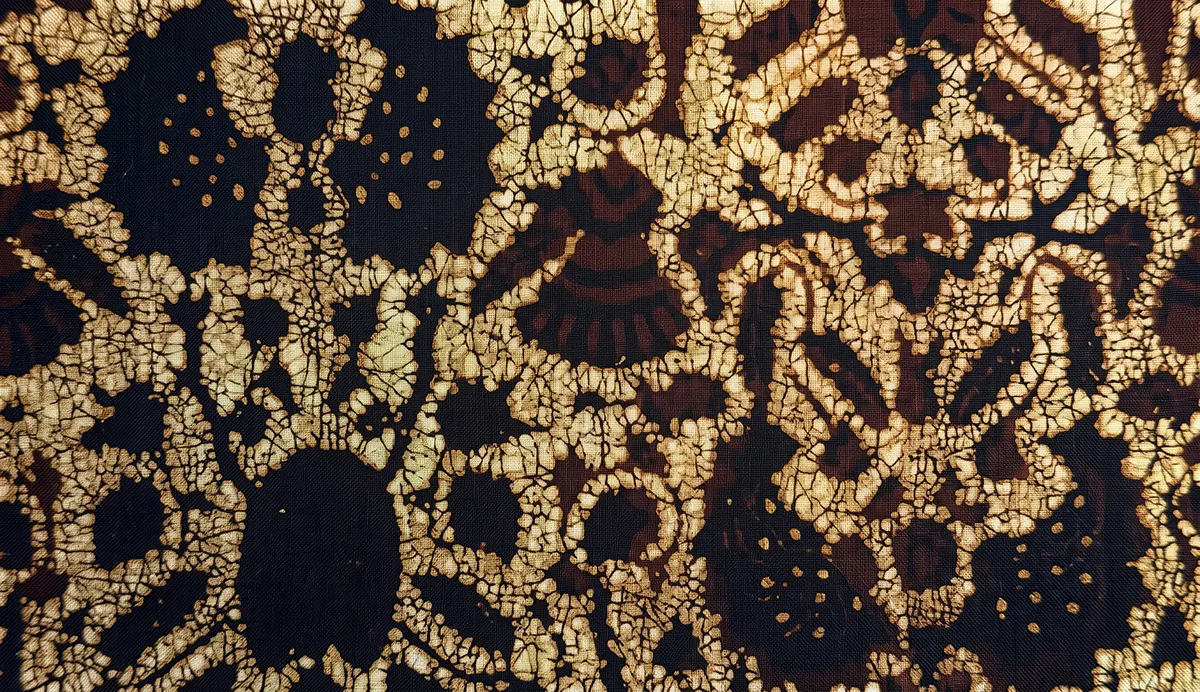
The Bledak Sidoluhur batik motif is a revered classical Javanese royal textile pattern symbolizing noble character, spiritual dignity, and a prosperous life journey. Originally created before the Mataram Sultanate era, the distinctive bledak variation features an intricate web of golden-brown wax crackle veins intersecting a deep, hand-dyed black background and sacred geometric forms. Crafted through multi-stage immersion dyeing, this heritage cloth bridges centuries-old court philosophy with the tactile artistry of traditional Indonesian textile manufacturing.
Historical Origins: From Ki Ageng Henis to the Royal Courts of Java
Understanding the cultural weight of a Sidoluhur batik fabric requires looking back at the foundational era of Central Javanese civilization. According to Ki Ageng Henis Mataram batik history, this iconic pattern was first conceptualized in the 16th century by Ki Ageng Henis, a respected spiritual teacher and the grandfather of Panembahan Senopati, the founder of the Mataram Sultanate. He created the pattern specifically for his descendants as a visual prayer, hoping that whoever wore the cloth would possess a mind and heart capable of leading with wisdom and humility.
As the Mataram Kingdom later divided into the royal courts of Surakarta (Solo) and Yogyakarta, the pattern became codified as one of the premier batik larangan or sacred court textiles. For centuries, it was worn exclusively during pivotal life-cycle ceremonies, most notably the mitoni (seventh-month pregnancy ritual) and traditional Javanese wedding nights. By wrapping the bride and groom in this textile, elders passed down an unspoken blessing for the couple to build a household grounded in grace and moral integrity.
Decoding the Visual Elements of Bledak Sidoluhur Batik
Every line and dot inside the Bledak Sidoluhur batik motif carries deliberate philosophical meaning rooted in Javanese cosmology. Rather than serving as mere decoration, the repeating diamond-shaped grid acts as a map of human spiritual evolution.
The Philosophy of Sido and Luhur
In the Javanese language, the word sido translates to “to become,” “continuous,” or “fulfilled,” while luhur means “noble,” “elevated,” or “honorable.” Combined, the name represents a continuous striving toward noble character (budi luhur). Within Javanese classical batik philosophy, achieving material wealth means little without spiritual refinement and respect for one’s community. The pattern reminds the wearer to remain grounded while pursuing higher ideals.
Sacred Geometry and the Cakar Ayam Motif
Looking closely at the diamond framework, you will notice stylized wing-like forms (lar or Garuda wings) and throne-like pavilions (meru or sacred mountain peaks) that symbolize protection, strength, and cosmic balance. Nestled within these structural borders are delicate filler patterns known as isen-isen, most notably the cakar ayam motif in Javanese batik accompanied by fine clusters of cecek (dots).
The cakar ayam (chicken claw) pattern depicts miniature claw-like lines radiating outward with precise symmetry. In Javanese tradition, just as a chicken tirelessly scratches the earth at dawn to feed its brood, this specific element represents diligence, self-reliance, and an honest pursuit of livelihood. Preserving the exact scale and proportion of these fine claw lines is essential to maintaining the historical integrity of the design.
What Makes It Bledak? The Art of Deliberate Wax Crackle
While standard court batiks feature clean, unbroken background fields, the bledak (also referred to as remukan) style introduces a dramatic marble-like texture across the cloth. Through a specialized crackle batik wax technique, artisans intentionally fracture the hardened beeswax and paraffin resist before submerging the fabric into the dye vat. As liquid dye seeps through thousands of microscopic fissures in the wax, it forms an organic network of golden-brown veins that unifies the foreground geometry with the dark background.
Inside the Workshop: How Authentic Bledak Sidoluhur is Hand-Crafted
In our family batik workshop in Pekalongan, Central Java—where we have been producing handmade textiles across three generations since the 1930s—crafting a true Bledak Sidoluhur batik motif requires patience, climate awareness, and master-level dye control. Unlike automated factory prints, authentic hand-dyed Indonesian batik responds directly to the touch of the artisan and the ambient humidity of the coastal workshop.
Selecting the Base Cloth and Applying the Wax
The process begins by preparing high-thread-count 100% cotton (such as fine Primisima cotton) or premium woven rayon. The fabric is washed and boiled to remove any factory sizing so the natural fibers can absorb molten wax and liquid dye all the way through to the core. Using either a hand-drawn canting spout or a finely forged copper block (batik cap), the artisan applies hot resist wax at a carefully regulated temperature. If the wax is too hot, it bleeds and blurs the delicate cakar ayam details; if it is too cool, it sits on top of the threads without penetrating the reverse side of the cloth.
Mastering the Crackle and Hand-Dyeing Nuances
Once the primary motif is waxed and sealed, the cloth undergoes the bledak cracking stage. Artisans gently crumple and manipulate the stiff, wax-coated cotton in cool water so hairline fractures develop evenly across the surface without detaching the wax from the fine cecek dots.
Understanding the color chemistry of traditional black and sogan batik fabric is equally important for collectors, fashion designers, and quilters. On the physical textile, the primary background color—both inside the central medallions and across the surrounding fields—is a true, deep black. However, when viewing close-up photography of the cloth, the dark background often appears to carry warm, earthy brownish undertones. This visual effect happens naturally because the fabric undergoes multiple manual immersion baths combining deep black dye with traditional sogan (warm golden-brown) dye baths that fill the dense bledak crackle veins. Under studio or natural camera lighting, the golden-brown micro-veins and hand-dyed sogan layers reflect warm light across the neighboring fibers, even though the base background on the actual cloth remains genuinely black.
Technical Comparison: Authentic Hand-Dyed Bledak vs. Factory Screen Print
For international textile buyers, boutique apparel makers, and quilt artists, distinguishing genuine wax-resist cloth from mass-produced imitation prints ensures long-lasting quality.
| Textile Characteristic | Authentic Hand-Dyed Bledak Sidoluhur | Mass-Produced Factory Print |
| Wax Crackle (Bledak Effect) | Organic, non-repeating veins formed naturally by crushed wax resist | Repetitive, mathematically identical crackle lines printed by rollers |
| Color Penetration | Reversible; deep black and sogan tones penetrate both front and back | Surface ink sits on one side; the reverse side remains pale or white |
| Background Depth | True hand-dyed black enriched by warm sogan undertones | Flat, uniform synthetic chemical pigment |
| Cakar Ayam Detail | Crisp artisan geometry with subtle, organic handmade character | Rigid, machine-stamped edges lacking wax-resist texture |
| Breathability & Drape | Soft, breathable natural cotton or rayon fibers | Often stiffened by heavy plastisol or surface pigment binders |
Practical Applications for Quilting, Apparel, and Interior Design
Because the Bledak Sidoluhur batik motif combines structured classical geometry with an all-over organic marble texture, it is highly versatile for both traditional and contemporary creative projects:
Quilting and Patchwork: In the international quilting community, crackle batiks are prized as dynamic blenders and focal blocks. The dense weave of high-grade batik cotton prevents fraying along bias cuts, while the golden-brown veins and deep black background add instant visual depth to heritage quilt tops, borders, and bindings.
Tailored Resort and Formal Apparel: Fashion designers frequently use this motif for structured blazers, men’s formal batik shirts, wrap skirts, and artisanal dresses. When crafted on rayon, it offers a fluid, cooling drape ideal for warm climates; on cotton, it provides crisp tailoring structure.
Textile Care and Maintenance: To preserve the deep black background and warm sogan crackle lines for decades, wash the fabric gently in cold water using a mild, phosphate-free detergent (such as traditional lerak soapnut extract or gentle baby shampoo). Avoid harsh bleach or wringing the cloth tightly, and always line-dry in a shaded, well-ventilated area away from direct midday sunlight.
(Catatan Internal Link: Tautkan frasa koleksi kain batik Anda ke halaman kategori utama di batiksfabric.com, serta tautkan ke artikel terkait seperti Batik Sido Mulyo. Untuk External Link DoFollow, tautkan kata “Indonesian textile manufacturing” atau “UNESCO” ke halaman resmi UNESCO Intangible Cultural Heritage untuk Indonesian Batik).
Frequently Asked Questions (FAQ)
What is the meaning and philosophy of the Bledak Sidoluhur batik motif? The Bledak Sidoluhur batik motif symbolizes a sacred prayer for the wearer to attain a noble character (budi luhur), high moral dignity, and spiritual fulfillment throughout life, framed by an organic web of wax-crackle veins.
What does “Bledak” mean in traditional Javanese batik making? In Javanese batik terminology, bledak (or remukan) refers to the intentional wax-crackle technique where hardened wax resist is crushed by hand before dyeing, allowing rich sogan dye to seep into the fractures and create a marble-like texture across the cloth.
Why does the black background in Sidoluhur batik look slightly brownish in photos? The actual background color on the physical fabric is true black both inside and outside the motif medallions. However, because traditional hand-dyeing layers golden-brown sogan dye into the dense surrounding crackle veins, camera lighting reflects warm earthy undertones in photographs while the real cloth remains black.
What does the cakar ayam (chicken claw) pattern symbolize in Sidoluhur batik? The cakar ayam filler motif represents diligence, independence, and an honest work ethic—mirroring how a chicken scratches the earth at dawn to provide for its family.
Who created the original Sidoluhur batik pattern?
According to Mataram historical records, the original Sidoluhur motif was created in the 16th century by Ki Ageng Henis, grandfather of Panembahan Senopati, founder of the Mataram Sultanate in Central Java.
How can I tell if a Bledak Sidoluhur batik fabric is authentic hand-dyed or factory printed? Authentic hand-dyed Bledak Sidoluhur batik has non-repeating, organic wax crackle veins and full dye penetration on both the front and back of the cloth, whereas factory prints have repetitive digital crackle lines and a pale or white reverse side.
Is Bledak Sidoluhur batik fabric suitable for quilting and garment sewing? Yes, high-thread-count cotton Bledak Sidoluhur batik resists fraying and holds crisp seams for quilting and patchwork, while its organic marble texture and breathable weave make it ideal for tailored shirts, dresses, and jackets.
