
 Deutsch
 Español
 Français
 Nederlands
 Português
 Русский
 日本語
日本語 Bahasa Indonesia
What is Authentic Batik Design? Batik is an ancient Indonesian textile art form of wax-resist dyeing, where intricate motifs are manually drawn or stamped onto fabric to tell profound stories of culture, social status, and spirituality. Rather than a simple printed pattern, genuine batik is a meticulous, labor-intensive process that honors centuries of deeply rooted tradition.
As a family of textile artisans based in Pekalongan, Indonesia—a coastal city internationally revered as the heart of the world’s batik heritage—we have lived and breathed this craft for generations. Since our grandfather laid the foundation for our manufacturing operations in the 1930s, we have dedicated ourselves to preserving the authentic techniques of hand-stamped (cap), hand-drawn (tulis), and vibrant tie-dye fabrics.
This guide is not woven from second-hand internet research; it is shared directly from the factory floor. By bridging our rich ancestral heritage with global textile demands, we aim to give you a true insider’s perspective on identifying classic symbols, embracing modern design trends, and understanding the unparalleled craftsmanship behind every yard of authentic batik.
The Origins and Fascinating History of Batik
In October 2009, UNESCO officially recognized Indonesian Batik as a Masterpiece of the Oral and Intangible Heritage of Humanity. This prestigious designation was not merely an award for a visually stunning textile; it was a global acknowledgment of a profoundly intricate craft, deeply intertwined with the cultural identity, rituals, and historical milestones of the Indonesian people.
To truly appreciate the value of authentic batik designs, one must trace their roots deep into the heart of Java. Originally, the intricate art of wax-resist dyeing was a highly exclusive practice guarded behind the walls of the Javanese Royal Courts (Keraton), primarily in inland cities like Yogyakarta and Surakarta. During this era, the creation of batik was a meditative, spiritual practice. The resulting classic batik motifs were strictly regulated by royal decree, with certain sacred patterns reserved exclusively for kings and nobility to symbolize cosmic harmony, power, and wisdom.
However, art as beautiful as batik could not remain confined to the palaces forever. As the centuries progressed, this guarded tradition naturally flowed outward, eventually reaching the dynamic northern coastal regions of Java.
This migration to the coast fundamentally transformed the textile’s history. In bustling, cosmopolitan port cities like Pekalongan, the rigid, earth-toned royal patterns encountered a melting pot of global maritime traders from China, India, Arabia, and Europe. This cultural convergence gave birth to Batik Pesisir (coastal batik)—a spectacular liberation of the craft characterized by vibrant color palettes, freer expressions, and eclectic multicultural motifs. It is exactly this spirited coastal evolution that birthed the vibrant hand-stamped and dyed fabrics we continue to craft in our Pekalongan workshops today.

Classic Batik Motifs: Symbols, Status, and Meanings
To the untrained eye, batik might simply appear as a beautifully patterned cloth. However, in authentic Javanese tradition, classic motifs are governed by pakem—strict, ancestral rules and guidelines that dictate how a pattern must be drawn. These traditional designs are not merely decorative; they are deeply philosophical visual languages. Historically, the specific motif you wore communicated your social status, your regional origin, and your spiritual intentions.
Here are four of the most iconic and historically significant classic batik motifs:
Kawung: The Symbol of Purity and Perfection
One of the oldest known batik designs, the Kawung motif features a striking geometric pattern of intersecting, four-lobed circles. These shapes are inspired by the cross-section of the areca palm fruit (kolang-kaling) or a blossoming lotus flower. In traditional Javanese philosophy, the lotus represents profound purity, emerging spotless from muddy waters. Wearing the Kawung motif serves as a reminder to live with honesty, perfect self-control, and a pure heart.
Parang: The Resilient Ocean Wave
Characterized by its powerful, diagonal S-shaped interlacing lines, the Parang motif is one of the most recognizable and historically restricted designs. Originally classified as an Awisan Dalem (a forbidden motif), it was exclusively reserved for kings and the highest-ranking members of the royal court. The sweeping lines mimic the relentless, powerful crests of ocean waves crashing against jagged rocks. It stands as a powerful symbol of an unyielding spirit, unwavering courage, and the continuous effort to overcome life’s obstacles.
Jlamprang: The Pride of Pekalongan
While inland courts focused on organic, earth-toned motifs, the coastal artisans created something entirely different. The Jlamprang motif is a breathtaking geometric design that brilliantly captures the multicultural trading history of our hometown. Distinctly lacking the traditional Javanese animal or floral figures, Jlamprang was heavily influenced by the intricate Patola woven textiles brought by Indian and Arab maritime merchants centuries ago.
As manufacturers who have meticulously crafted textiles in Pekalongan for decades, we see the Jlamprang as more than just a pattern—it is the ultimate representation of our city’s open, cosmopolitan heritage and our historical ability to weave global influences into an authentic local masterpiece.
Megamendung: The Clouds of Cirebon
Originating from the coastal city of Cirebon, the Megamendung motif is immediately identifiable by its bold, sweeping cloud formations. This striking design is a beautiful testament to historical Chinese influences on the northern coast of Java, adapted from the cloud motifs found on imported Ming dynasty ceramics. Philosophically, the word Mega means cloud, and Mendung means cool or dim. The motif symbolizes the importance of maintaining tranquility, patience, and a cool head, even in moments of anger or adversity.
The Evolution: Embracing Modern & Contemporary Batik
While the strict, ancestral rules of classic motifs hold profound historical significance, the true beauty of batik lies in its artistic adaptability. As the textile industry shifted and global aesthetics transformed, so too did the hands of the artisans. Today, modern and contemporary batik has broken free from traditional constraints, evolving into a highly versatile medium that is deeply celebrated in both high-end fashion and the international quilting community.
This transition does not erase history; rather, it expands the canvas, allowing traditional wax-resist techniques to meet boundless modern creativity.
Modern Color Palettes and Abstract Expressions
Historically, inland batik relied heavily on natural dyes, resulting in a muted palette of earthy browns, deep indigos, and stark whites. Modern batik, however, is a celebration of vibrant, unapologetic color.
By utilizing advanced, high-quality reactive dyes on premium materials like breathable cotton and flowing rayon, artisans can now achieve breathtaking spectrums—from vivid fuchsias and ocean teals to soft pastel gradients.
Contemporary Motifs: Instead of rigid geometric symbols, modern designs often feature flowing, abstract expressions, oversized florals, and organic, nature-inspired elements.
Versatility in Craft: This liberated approach produces dynamic, eye-catching fabrics that offer fashion designers and quilters endless possibilities for their creative projects without being bound by the cultural restrictions of royal motifs.
Innovative Fusion: Tie-Dye and Hand-Painting
The most exciting frontier in modern batik fabric is the fusion of multiple manual dyeing disciplines. To meet the diverse tastes of the global market, skilled artisans have begun blending the ancient art of hot wax-resist with contemporary techniques like tie-dye and manual hand-painting.
Having expanded our own factory operations to serve worldwide textile exports since 2010, we have witnessed firsthand the incredible global demand for these hybrid styles. The process is a masterpiece of manual labor:
The Layering Technique: A piece of high-grade cotton may first be intricately tied and dyed to create a vibrant, textured background.
Wax Application: Once dried, artisans meticulously apply hot wax using traditional methods to outline intricate floral or abstract patterns over the tie-dye base.
Hand-Painting (Colet): Finally, individual sections within the wax borders are carefully hand-painted with a brush, adding brilliant pops of contrasting color before the final washing process removes the wax.
This innovative fusion creates a fabric of immense artistic value. Because every step—from the folding of the tie-dye to the brushstrokes of the hand-painting—is done entirely by human hands, no two yards of fabric are ever exactly alike.
Behind the Fabric: How Authentic Batik is Crafted
In an era of mass production, true craftsmanship is a rare commodity. Stepping onto our factory floor at Ambologo in Pekalongan—a family enterprise our grandfather established in the 1930s before expanding into formal factory operations in 1960—you are instantly greeted by the earthy scent of hot wax and the rhythmic sounds of artisans at work. We are not dropshippers or curators; we are manufacturers who understand that authentic batik is born from sweat, precision, and a profound respect for the wax-resist dyeing process.
Understanding how genuine batik is made is crucial for distinguishing a masterpiece from a cheap imitation. The magic lies entirely in how the hot wax (malam) is applied to premium materials like breathable cotton or flowing rayon.
Batik Tulis (Hand-Drawn) vs. Batik Cap (Hand-Stamped)
There are two primary methods for applying the wax resist, each requiring immense skill and patience:
Batik Tulis (The Hand-Drawn Masterpiece): This is the oldest and most intricate method. Artisans use a pen-like tool called a canting, which has a small copper reservoir and a tiny spout. The artisan scoops molten wax and meticulously draws the design directly onto the fabric by hand. A single piece of Batik Tulis can take weeks or even months to complete. It is the pinnacle of wearable art.
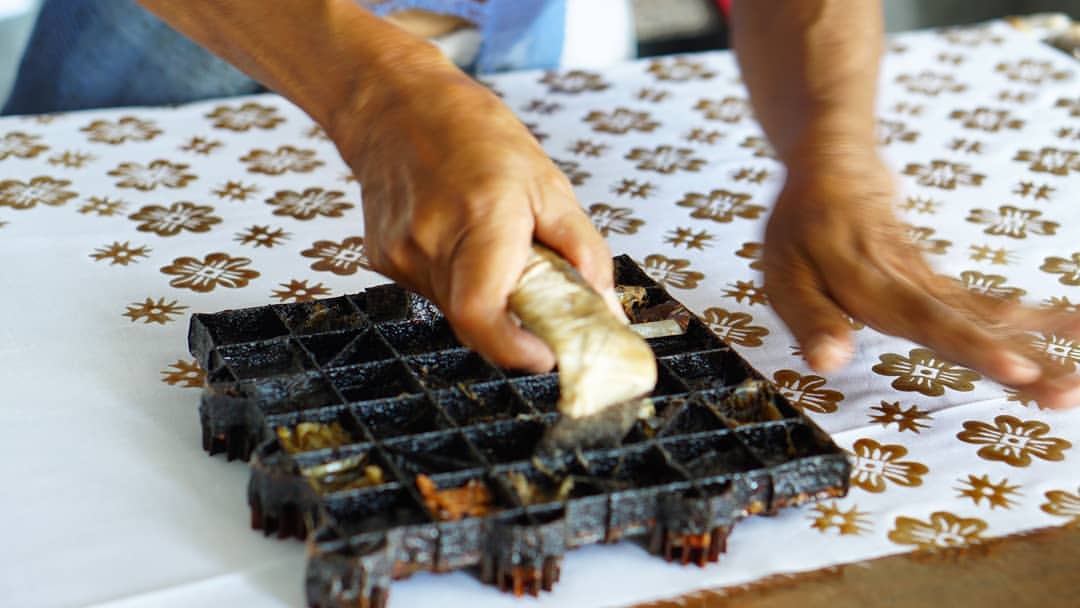
Batik Cap (The Hand-Stamped Heritage): To meet higher demands without sacrificing authenticity, the cap method was developed. Instead of drawing with a canting, artisans use a heavy, intricately crafted copper stamp.
The Human Touch in Batik Cap It is a common misconception that batik cap is a mechanized process. Nothing could be further from the truth. Stamping hot wax requires an extraordinary level of human accuracy, physical endurance, and rhythm. The artisan must dip the heavy copper stamp into a vat of boiling wax, carefully tap off the excess, and press it onto the fabric with the exact right amount of pressure. They must align the edges of the stamp perfectly by eye to ensure a continuous, seamless pattern across yards of fabric.
Because of this intense manual labor, every meter of batik cap possesses a unique character. You will find slight variations in color depth, microscopic misalignments, or tiny cracks where the wax cooled—these are not flaws; they are the proud fingerprints of human craftsmanship.
The Danger of “Fake” Printed Batik
Today, the global market is flooded with what we in the industry call tekstil motif batik (batik-patterned textiles). These are fabrics that have been run through digital or rotary screen-printing machines to mimic traditional patterns. They are not authentic batik.
To be classified as true batik, the fabric must undergo the physical process of perintangan lilin malam (wax-resist dyeing). If wax was never applied to the cloth to resist the dye, it is merely a printed fabric masquerading as batik.
How to spot the difference:
The Reversible Test: Because authentic batik involves soaking the fabric in dye after the wax is applied, the vibrant colors and patterns penetrate entirely through the fibers. Genuine batik looks almost identical on both the front and the back. Machine-printed “fake” batik will have a distinct, faded, or completely white underside.
The Touch and Scent: Authentic handmade fabrics often carry a very faint, earthy scent of the wax and natural dyes, and they drape beautifully on the body compared to stiff, industrially printed polyesters.
FAQ
What is the true meaning of authentic batik designs? Authentic batik designs are not just printed patterns; they are created using a traditional wax-resist dyeing technique. These motifs often carry deep philosophical meanings, symbolizing spirituality, social status, and historical heritage from Indonesian culture.
How can you tell if batik fabric is authentic? You can identify authentic batik by checking the reverse side of the fabric. Genuine wax-resist dyed batik is reversible, meaning the vibrant colors and motifs penetrate completely through the fibers. Machine-printed replicas usually have a faded or solid white back.
What are the most popular classic batik motifs? Some of the most renowned classic batik motifs include the Kawung (symbolizing purity), the Parang (representing unyielding spirit and ocean waves), the Megamendung (cloud patterns from Cirebon), and the Jlamprang (a geometric coastal design from Pekalongan).
What is the difference between batik tulis and batik cap? Batik tulis is entirely hand-drawn using a pen-like tool called a canting, making it highly intricate and time-consuming. Batik cap is created using a hand-held copper stamp to apply the hot wax. Both are authentic, manual processes that require immense human skill.
Is modern batik fabric good for quilting projects? Yes, modern authentic batik is highly prized by global quilters. Made from high thread-count cotton, the fabric is durable, features a tight weave, and possesses brilliant, reversible colors that make intricate patchwork and quilting projects stand out.
How do you properly wash and care for hand-dyed batik? To maintain the vibrant reactive dyes, always wash hand-dyed batik in cold water using a mild detergent or traditional ‘lerak’ soap. Avoid bleach and never dry the fabric in harsh, direct sunlight to prevent the colors from fading.
Why is Pekalongan famous for its batik production? Pekalongan is a historic northern coastal city in Java, Indonesia. It is famous for ‘Batik Pesisir’ (coastal batik), which incorporates vibrant colors and eclectic motifs influenced by centuries of Arab, Chinese, Indian, and European maritime trade.
Where to Buy Genuine, High-Quality Batik Fabric
Finding authentic, manually processed batik in a digital market flooded with machine-printed replicas can be challenging. For true textile artists, quilters, and fashion designers, the difference in quality, color depth, and the very soul of the fabric is immeasurable.
Since the 1930s, our family enterprise, Ambologo, has preserved this rich textile heritage right here in Pekalongan, Indonesia. By overseeing every step of the production process on our factory floor, we bridge the gap between ancient, manual craftsmanship and modern global accessibility. We are passionate about ensuring that the art of true wax-resist dyeing and hand-painting continues to thrive, delivering museum-quality craftsmanship directly to your doorstep.
Whether you are searching for classic hand-stamped cap fabrics with deep historical roots, or vibrant, modern hand-dyed cotton and flowing rayon for your next contemporary fashion or quilting project, you deserve the real thing.
Explore our meticulously crafted collections at BatiksFabric.com, where every yard tells a story of genuine human artistry.
