
 Deutsch
 Español
 Français
 Nederlands
 Português
 Русский
 日本語
日本語 Bahasa Indonesia
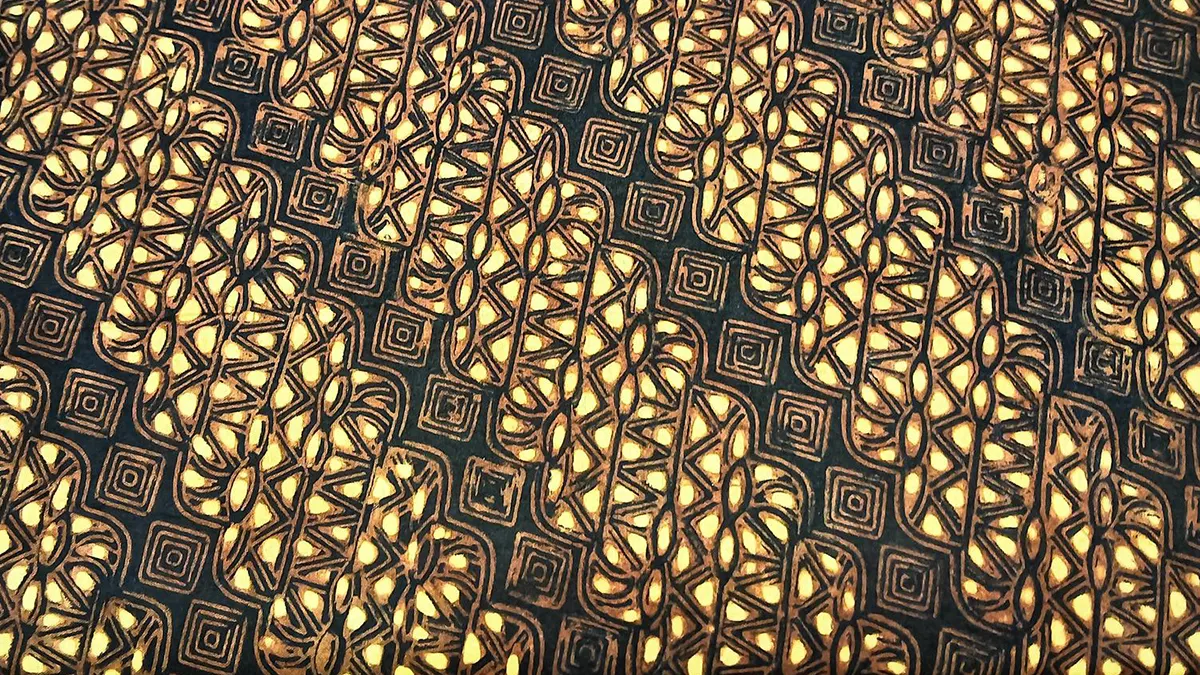
Parang Kusumo batik is one of the oldest and most sacred Indonesian royal batik motifs originating from the royal courts of Central Java. Understanding the true Parang Kusumo batik meaning reveals a deep Javanese philosophy: a tireless human struggle to achieve inner fragrance, noble character, and spiritual prosperity. Visually, this iconic textile is divided into two distinct court styles—the high-contrast white and dark brown geometry of Yogyakarta, and the warm, golden sogan brown floral contours of Surakarta (Solo).
When examining authentic Parang Kusumo batik, textile collectors, fashion designers, and quilters worldwide can read subtle visual codes woven into the cloth. Drawing from our family’s batik manufacturing heritage established in the 1930s, this guide explains the history, symbolism, and the exact Solo vs Jogja batik difference between the two royal court traditions.
What is Parang Kusumo Batik? Etymology and Royal Philosophy
To appreciate this traditional Javanese Parang pattern, we must look closely at the Javanese words that gave the motif its name. Every diagonal line and curve drawn in hot liquid wax carries a deliberate moral message passed down by royal artisans.
The Meaning of Parang and Kusumo
The word Parang traces its roots to the Javanese term pereng, which means a steep cliffside or the unbroken, rolling waves of the southern ocean crashing against coastal rocks. Those diagonal, knife-like waves symbolize perseverance, resilience, and a human spirit that never surrenders to life’s hardships.
Meanwhile, the word Kusumo translates to a blooming flower or a blossom that spreads a sweet fragrance across the garden. Combined together, the Parang Kusumo batik meaning teaches that a fulfilling life requires continuous effort and personal discipline to cultivate a fragrant reputation, honorable conduct, and harmony within society. In classical Javanese philosophy, outer material wealth must always be guided by inner nobility.
Cultural Usage in Javanese Tradition
Many people who study the traditional Javanese Parang pattern often hear that Parang designs are avoided during weddings because the diagonal blades historically symbolized conflict or struggle. However, Parang Kusumo batik is a celebrated exception to that cultural rule.
Another layer of the Parang Kusumo batik meaning comes alive during courtship ceremonies. Because Kusumo represents blooming affection and spiritual harmony, this specific design serves as a traditional Javanese wedding batik pattern during the engagement or ring-exchange ceremony (tukar cincin). When worn by a betrothed couple, the interconnected floral waves express a prayer that their blossoming love will endure life’s trials and bring lasting honor to both families.
Historical Roots: How the 1755 Treaty of Giyanti Shaped Solo and Jogja Batik
Why do two versions of Parang Kusumo batik exist today? The answer lies in a pivotal 18th-century historical event that forever shaped Indonesian royal batik motifs.
In 1755, the signing of the Treaty of Giyanti divided the Islamic Mataram Kingdom of Central Java into two separate royal courts: the Kasunanan of Surakarta (Solo) and the Sultanate of Ngayogyakarta (Jogja). Among all Indonesian royal batik motifs, court decrees strictly regulated batik larangan—forbidden batik patterns reserved exclusively for the monarch and immediate royal family.
Both palaces preserved the sacred heritage of Parang Kusumo batik, yet their court artisans developed distinct aesthetic standards. You can explore more about the global cultural significance of these court textiles through the UNESCO Intangible Cultural Heritage page on Indonesian Batik. Over centuries, the divergent rules of the two palaces created the unmistakable Solo vs Jogja batik difference we see on cotton fabrics today.
Visual Breakdown: Solo vs Jogja Batik Difference in Parang Kusumo Batik
When we lay authentic fabric swatches side by side on our workshop tables, the contrast between the two royal capitals becomes immediately clear. Below is a detailed visual examination based on actual production pieces of Yogyakarta vs Surakarta Parang batik.
1. Color Palette: Sogan Warmth vs. Striking Contrast
The fastest way to spot the Solo vs Jogja batik difference lies in the dye bath and background treatment.
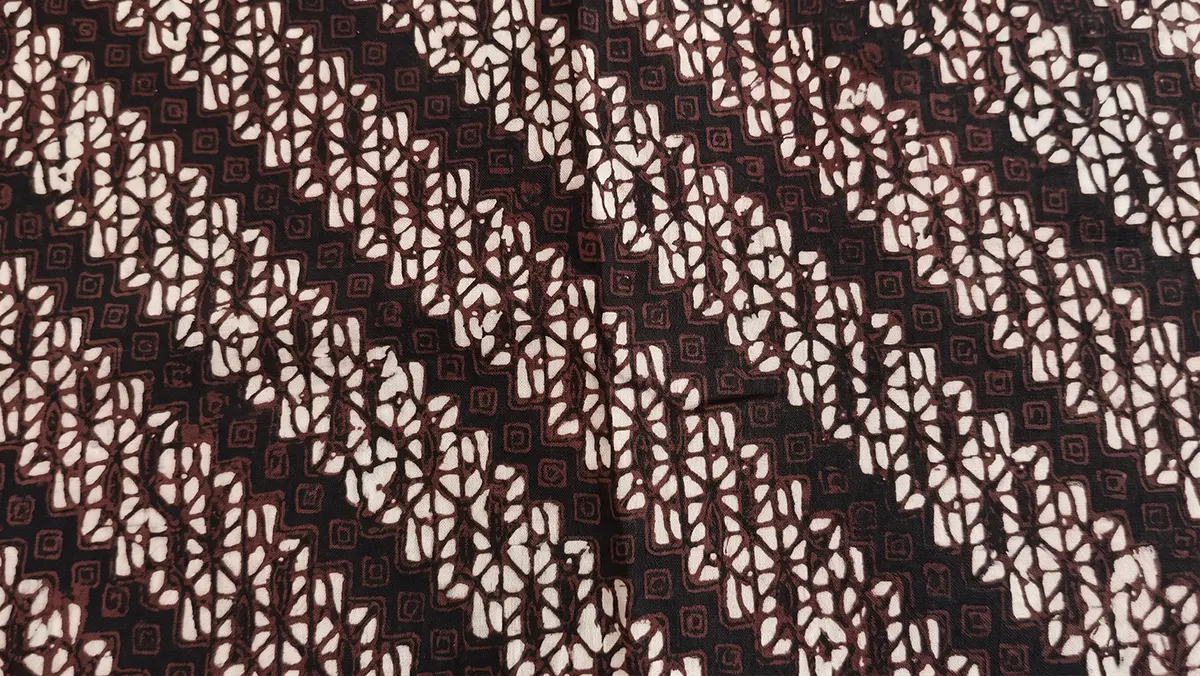
In the Yogyakarta style of Parang Kusumo batik, the motif commands attention through bold, high-contrast colors. The main body of the diagonal parang blades preserves the crisp, bright white tone of the bleached cotton cloth (known as putihan), which is sharply outlined by deep, dark earthy brown veins and set against a jet-black background. This striking light-against-dark contrast reflects the resolute, firm character of the Yogyakarta Sultanate.
Conversely, the Solo style embraces a warm, golden-yellow and reddish-brown sogan palette paired with a deep black background. Rather than leaving the interior of the motif bright white, Surakarta artisans immerse the cloth to achieve a rich, glowing golden-ochre tone inside the pattern. The overall visual impression is soft, regal, and classical.
2. Motif Geometry, Wave Contours, and Isen-Isen Details
Examining the internal filling patterns—known in batik terminology as isen-isen—of a traditional Javanese Parang pattern reveals another layer of craftsmanship in mlinjon and diagonal wave batik geometry.
In the Jogja Parang Kusumo batik fabric, the diagonal bands form structured, assertive rows filled with a dense network of dark brown intersecting lines that divide the white space into small, geometric, petal-like segments. The outer edges of the white bands feature rhythmic, stepped indentations that maintain a strong diagonal momentum across the cloth.
In the Solo Parang Kusumo batik fabric, the outer silhouette of each diagonal band curves gracefully into pronounced, rounded three-lobed arches that closely resemble blooming flower petals. Inside these golden-brown arches, the isen-isen consists of intricate, disciplined zig-zag triangles flanking a central chain of elongated oval links. Every segment is meticulously framed by double-lined borders that highlight the floral delicacy of the Surakarta court style.
3. The Mlinjon Diamond Border Alignment and Diagonal Direction
Between every diagonal row of parang waves runs a narrow separating lane populated by small diamond-shaped motifs called mlinjon. This element represents the spark of life and mental focus.
On the Yogyakarta fabric, the mlinjon appear as subtle, dark-brown nested squares and diamonds resting quietly within the deep black channels between the bright white parang bands. Because their dark brown hue sits close in value to the black background, they provide a quiet structural anchor without competing with the bright white main motif.
On the Solo fabric, the mlinjon stand out prominently as multi-layered, concentric diamond shapes rendered in warm golden sogan brown against the black dividing lanes. Each diamond sits neatly aligned with the floral indentations of the neighboring waves, creating a cohesive, interlocking geometric grid. Furthermore, in traditional court dress codes for Yogyakarta vs Surakarta Parang batik, the diagonal slope of the waves runs in opposite directions when wrapped around the body, symbolizing each royal house’s distinct lineage.
Quick Comparison Table: Yogyakarta vs Surakarta Parang Batik
To help designers, students, and textile buyers evaluate Yogyakarta vs Surakarta Parang batik side by side, the table below summarizes the visual characteristics observed directly on the fabrics:
| Visual Feature | Jogja Parang Kusumo Style | Solo Parang Kusumo Style |
| Dominant Color Palette | Crisp white interior, dark sogan brown lines, and deep black background | Golden-yellow sogan interior, warm brown lines, and deep black background |
| Overall Aesthetic | Bold, high-contrast, structured, and geometric | Warm, classical, intricate, and floral-contoured |
| Wave Edge Contour | Stepped, serrated diagonal edges along the white bands | Rounded, scalloped floral arches resembling blooming petals |
| Internal Isen-Isen | Dense web of dark brown intersecting lines creating white mosaic cells | Symmetrical zig-zag triangles with a central linked oval chain |
| Mlinjon Diamond Border | Subtle dark-brown concentric squares blending into the black channel | Prominent golden-brown concentric diamonds clearly visible on black |
From Artisan Workshop to Fabric: How Authentic Parang Kusumo Batik is Crafted
Producing a true Parang Kusumo batik requires immense patience and mastery of hot wax resist. In our Pekalongan manufacturing studio, where our family has preserved traditional textile craftsmanship since the 1930s, every yard of cloth undergoes a rigorous multi-stage process.
Whether crafted through hand-drawn canting work (batik tulis) or precision hand-stamped copper blocks (batik cap), artisans must apply liquid beeswax and paraffin at an exact temperature onto high-thread-count 100% cotton primisima fabric. Because every traditional Javanese Parang pattern relies on crisp diagonal geometry, temperature control is vital: if the wax is too hot, the fine mlinjon diamonds and internal isen-isen lines will bleed; if too cool, the wax will not penetrate the reverse side of the cotton fibers.
Because authentic hand-stamped and hand-drawn batik fabric is dyed in full immersion vats, the rich black and sogan tones penetrate completely through both sides of the textile. This reversible quality and tight cotton weave make classical Parang Kusumo batik an exceptional choice for:
Heirloom quilting projects, especially for dramatic diagonal borders, sashing, and high-contrast geometric blocks.
Tailored formal wear, including men’s dress shirts, structured blazers, and evening dresses that honor Indonesian heritage.
Interior design accents such as table runners, throw pillows, and framed textile wall art.
If you are looking to incorporate authentic Indonesian royal batik motifs into your next sewing or apparel collection, explore our curated range of authentic Indonesian cotton batik fabrics crafted directly by our artisans.
Frequently Asked Questions About Parang Kusumo Batik
What is the visual difference between the Solo and Jogja Parang Kusumo batik fabric options? The Jogja variant features a high-contrast bright white motif interior with dark brown mosaic lines and stepped edges on a black background. The Solo variant features a warm golden-ochre sogan brown interior with rounded, petal-like scalloped edges, internal zig-zag lines, and prominent diamond mlinjon borders on black.
What does the Parang Kusumo motif symbolize when worn as clothing? In Javanese culture, Parang Kusumo symbolizes perseverance that leads to an honorable reputation and inner nobility (“a fragrant blossom”). It is also traditionally worn during engagement ceremonies to represent blooming affection and harmony.
Is this Parang Kusumo batik fabric printed on one side or dyed through both sides? Our fabric is authentic wax-resist batik dyed through full vat immersion, not surface screen-printed imitation cloth. The rich black and sogan brown colors penetrate completely to the back of the cotton, making both sides virtually identical.
Why is 100% cotton primisima preferred for quilting and tailored garments? Cotton primisima is the highest grade of Indonesian batik cotton, woven with a high thread count and smooth mercerized finish. For quilters, it cuts cleanly without fraying at the seams; for garment makers, it offers exceptional breathability and a structured drape.
Can I wear Parang Kusumo batik fabric to a formal event or wedding reception? Yes. While certain royal Parang patterns were historically restricted inside palace walls, Parang Kusumo is widely cherished today for formal attire, engagement celebrations, diplomatic gatherings, and cultural events.
How should I wash and care for authentic sogan and black cotton batik fabric? Wash gently by hand or on a delicate cold machine cycle using a mild, pH-neutral detergent without bleach. Dry the fabric in the shade away from direct sunlight to preserve the deep black ground and warm sogan tones for decades.
How can I use the diagonal lines of Parang Kusumo in patchwork quilting? Because Parang Kusumo is naturally structured on a 45-degree diagonal axis with built-in mlinjon diamond channels, quilters frequently cut along the mlinjon lanes to create continuous bias bindings, mitered quilt borders, and dramatic geometric blocks.
