
 Deutsch
 Español
 Français
 Nederlands
 Português
 Русский
 日本語
日本語 Bahasa Indonesia
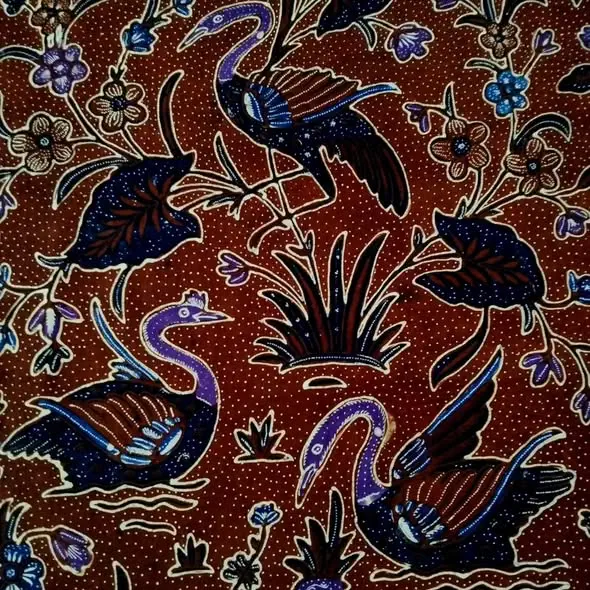
The conclusion of the 1830 Java War against Dutch colonial forces triggered a massive cultural diaspora. Royal loyalists and master artisans fleeing the conflict decentralized the highly guarded textile arts of the Mataram courts across the Indonesian archipelago. This exodus laid the foundation for a dynamic evolution, transforming an aristocratic discipline into a thriving interregional industry.
The 1830 Diaspora and the Classical Roots of Mataram
The year 1830 marked the bitter conclusion of the Java War (Perang Diponegoro), a geopolitical rupture that permanently reshaped the colonial administration of the Dutch East Indies. Yet, beyond the battlefield, this conflict served as a profound cultural catalyst. The refusal of royal loyalists to submit to colonial authority triggered a massive exodus, inadvertently democratizing one of the world’s most sophisticated and highly guarded textile traditions: the Mataram court batik.
The Philosophy of the Keraton: Batik Tulis and Awisan Dalem
Before this monumental diaspora, the art of batik tulis (hand-drawn wax-resist dyeing) was deeply insular. It was cultivated strictly within the sacred, high-walled confines of the Mataram courts—specifically the keratons of Surakarta (Solo) and Yogyakarta. Within these palace walls, batik was never treated as a mere commercial commodity. It was an aristocratic discipline, a medium for spiritual meditation performed primarily by noblewomen and elite artisans.
The creation of courtly batik was governed by uncompromising royal standards, known as pakem. The visual vocabulary of Mataram textiles was so intrinsically linked to cosmic power and social hierarchy that specific geometric patterns were declared awisan dalem—forbidden motifs restricted exclusively to the Sultan and his bloodline.
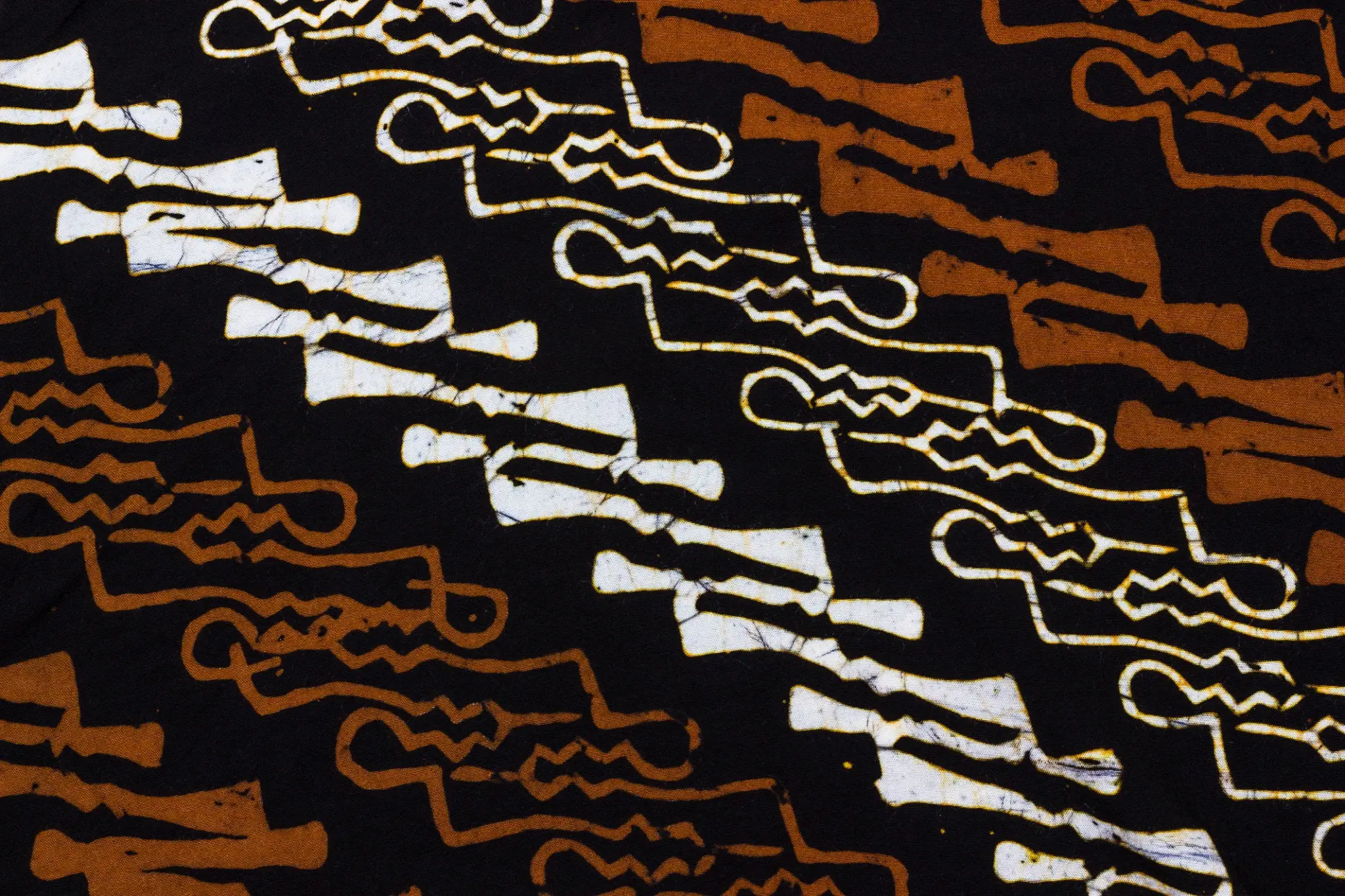
Chief among these was the Parang motif. Resembling rugged dagger blades or rhythmic, crashing waves moving diagonally across the cambric, the Parang symbolized unbroken power, resilience, and the internal battle against human desires. Similarly, the Kawung motif—featuring four intersecting palm fronds or lotus petals arranged in a geometric grid—represented perfect cosmic order, purity, and the universal origin of life.
The Botanical Science of the Original Sogan Palette
Central to the Mataram aristocratic aesthetic was the meticulous science of natural dyeing. True court batik firmly rejected the vivid, boisterous colors found in coastal regions, favoring instead a palette of deep indigo blues, creamy whites, and the iconic, earthy brown known as sogan. This solemn color scheme was a direct reflection of Javanese philosophical restraint and elegance.
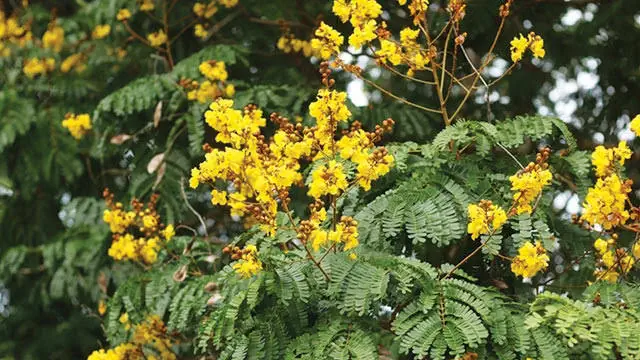
The signature sogan brown was not easily acquired; it was painstakingly extracted from the bark of the Peltophorum pterocarpum (often called the yellow poinciana or copperpod tree). Palace artisans subjected the bark to lengthy, ritualistic boiling and extraction processes. The resulting dye was then meticulously repeatedly applied to the cotton cloth, achieving a chemical bond that produced a highly resilient, deeply saturated hue.
This sophisticated mastery of botanical chemistry and spiritual geometry formed the foundational blueprint of Indonesian batik. However, the subsequent exile of Diponegoro’s followers would soon force these masterpieces out of the palaces, adapting them to new botanicals and environments across the archipelago.
The Post-War Diaspora: Territorial Innovation and Botanical Adaptation
The migration of Javanese artisans out of the Mataram sphere following the 1830 Java War catalyzed a period of intense regional innovation. Stripped of the Keraton’s vast resources and cut off from established trade routes, these royal exiles had to rely on sheer ingenuity and local ecosystems to sustain their craft. This era birthed distinct regional identities that forever altered the landscape of Indonesian traditional textiles.
Sokaraja: The Botanical Extraction Laboratory of Banyumas
In the Banyumas region, particularly the Sokaraja center, followers of Prince Diponegoro such as the artisan Najendra spearheaded a localized textile revolution. Without access to imported materials, they transformed Sokaraja into a veritable laboratory for botanical dye extraction.
They pioneered advanced dip-dyeing techniques utilizing the endemic flora of the region. The Indigofera (locally known as the Tom tree) was cultivated to produce deep, highly resilient blue colorways. Meanwhile, the Pace and Mengkudu trees (Morinda citrifolia) were extracted with precision to yield the vivid red and yellow tones that came to define the classic Banyumasan palette. Furthermore, this period was marked by a fierce economic self-sufficiency; the artisans used only unbleached plain cloth (cambric) woven domestically by local villagers, entirely rejecting imported fabrics.
The Southern Corridor: Cultural Syiar and the Artisans of Kebumen
Moving along the southern route of Java, the proliferation of batik became historically intertwined with Islamic propagation (syiar). In Kebumen, a distinguished cleric from Yogyakarta named Penghulu Nusjav utilized batik production to economically empower local communities along the eastern banks of the Lukolo River.
The early production in this region birthed the Teng Abang (or Blambangan) technique. Long before the industrial revolution introduced the copper cap (stamp), these artisans demonstrated remarkable pre-industrial efficiency.
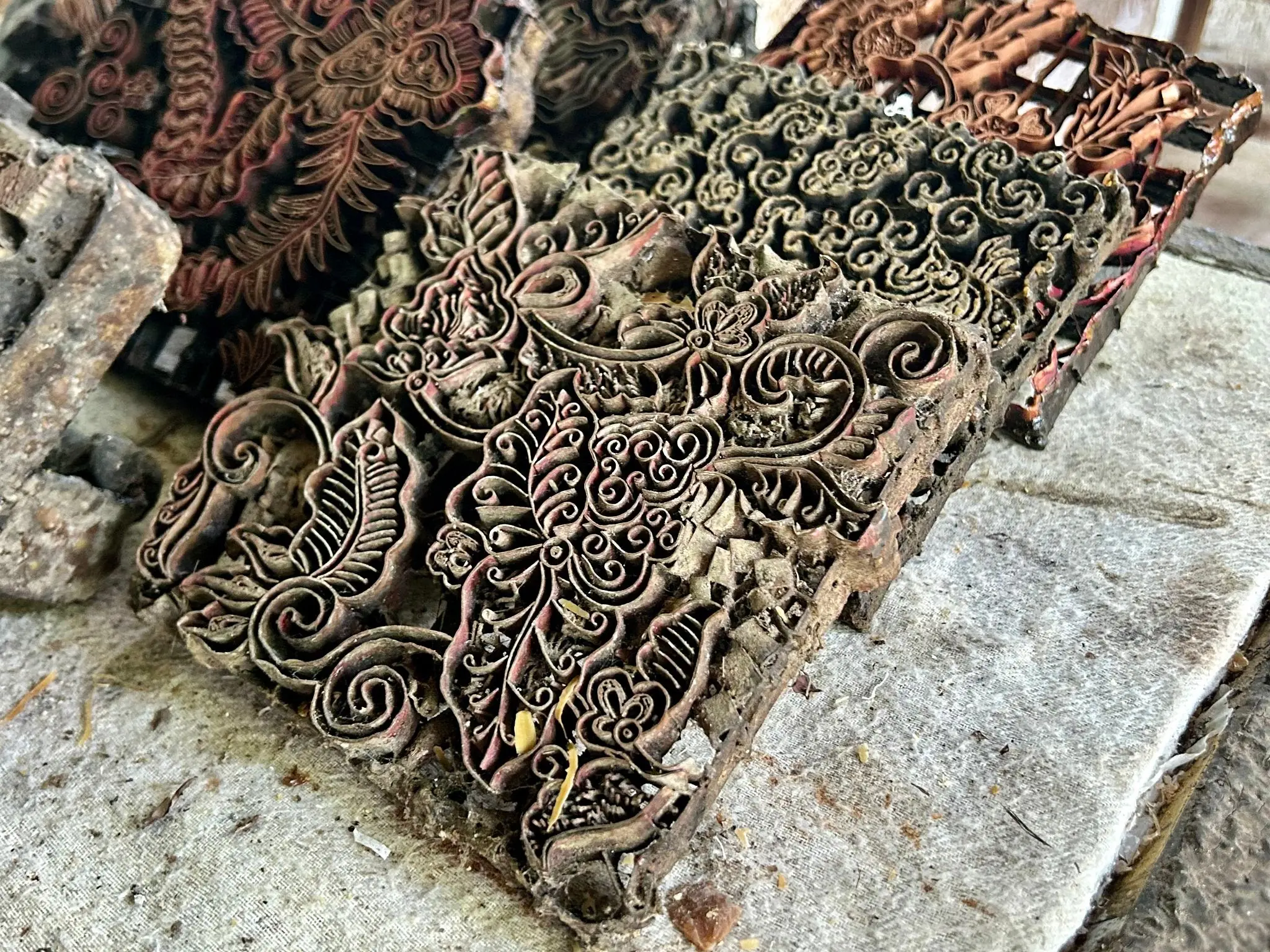
They carved intricate motifs of local trees and birds into wooden blocks. These wooden stamps were then dipped in turmeric (kunyit) extracts to rapidly pattern the cloth. This ingenious method served as a crucial technological bridge between the painstaking batik tulis and the mass-produced copper stamps of the 20th century.
The Priangan Syncretism: Blending Courtly Rigidity with Coastal Dynamism
Geopolitical turbulence in Central Java also forced elite merchants and artisans from Tegal, Pekalongan, Kudus, and Banyumas to migrate westward, laying the foundational textile industry in the Priangan highlands (covering modern-day Ciamis, Tasikmalaya, and Garut).

When the strict geometric doctrines of Mataram collided with the vibrant local culture of West Java, a striking visual hybridity emerged. The migrating artisans brought their traditional sogan brown techniques, but they adapted them to local tastes, seamlessly fusing them with the expressive and localized Garutan patterns.
What began in Ciamis as a localized effort to fulfill the personal clothing demands of Diponegoro’s veterans rapidly evolved. By seamlessly integrating the deep philosophical roots of Central Java with the dynamic colors of the coast, they created a high-value commercial enterprise that would soon be distributed throughout the entire western region of the archipelago.
The Dawn of Commercialization: Coastal Industrialization and the Copper Stamp
As the 19th century gave way to the 20th, the insular world of Javanese traditional textiles collided with the realities of global trade. The northern coastal (Pesisir) regions, notably Pekalongan and Tegal, became the vanguard of batik’s industrial revolution. This era was characterized by the transition from slow, meditative hand-drawn techniques to mass production, fundamentally altering the local economy.
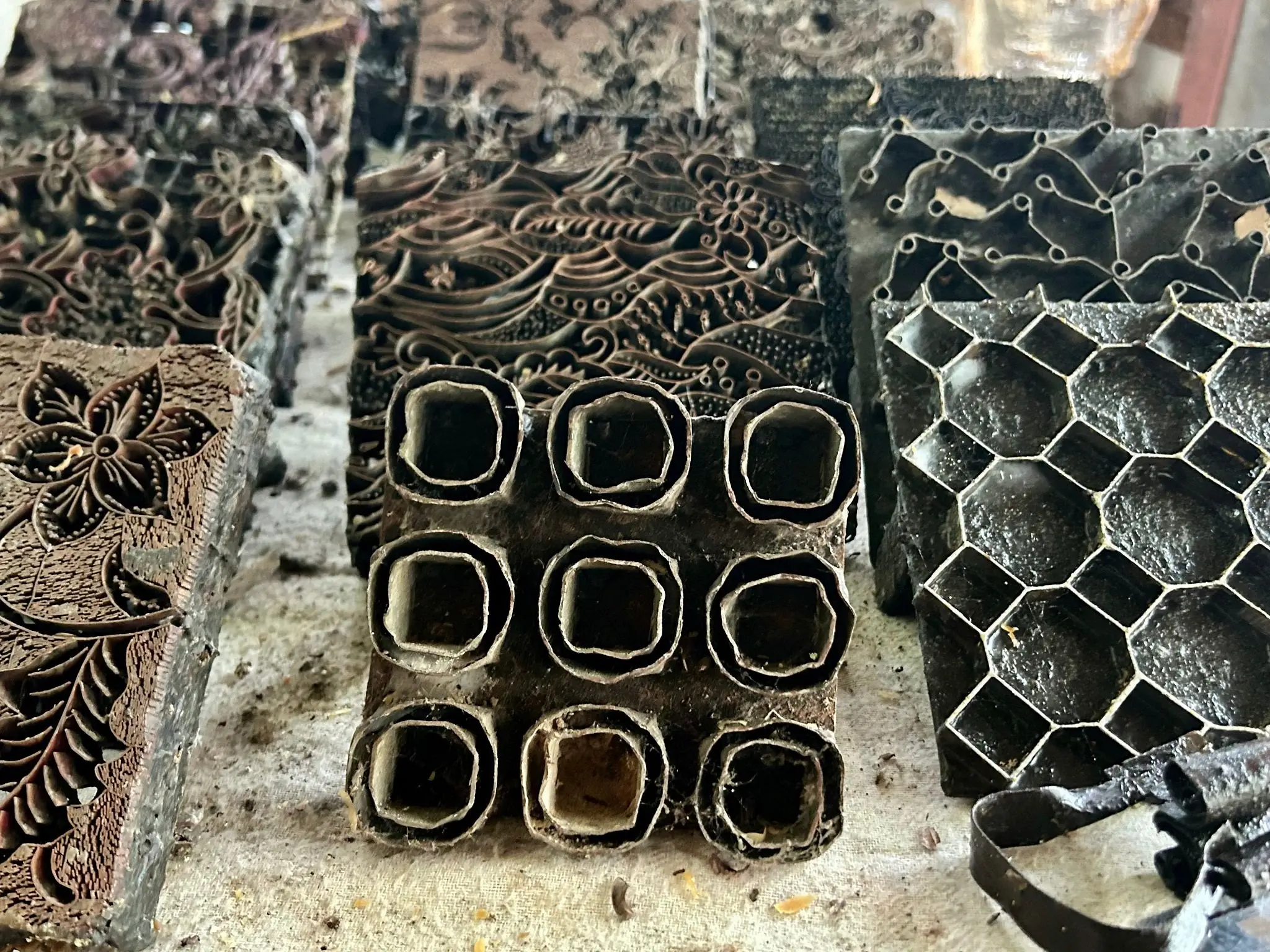
Following World War I, the introduction of the copper stamp (cap tembaga) served as a massive technological leap. Simultaneously, foreign synthetic dyes imported from Germany and England—such as aniline dyes—flooded the coastal markets. These innovations bypassed the tedious botanical extraction processes, allowing for vibrant, highly consistent colorways produced at unprecedented speeds.
The economic ripple effect was profound. In towns like Wonopringgo and Tirto, agricultural laborers from local sugar factories migrated en masse to the burgeoning batik companies, lured by significantly higher salaries. Meanwhile, Arab and Chinese merchants established complex credit ecosystems, supplying imported raw materials to local artisans and transforming the coastal regions into a networked, industrial powerhouse.
The Rise of Tanah Abang: From Local Market to Global Epicenter
As coastal production skyrocketed, the demand for a centralized distribution hub became critical. Before World War I, Batavia’s (Jakarta) fish market harbor served as a modest interregional trading post. However, as the volume of stamped batik increased, the trade shifted inland, cementing Tanah Abang as the undisputed epicenter of Indonesian textile distribution.
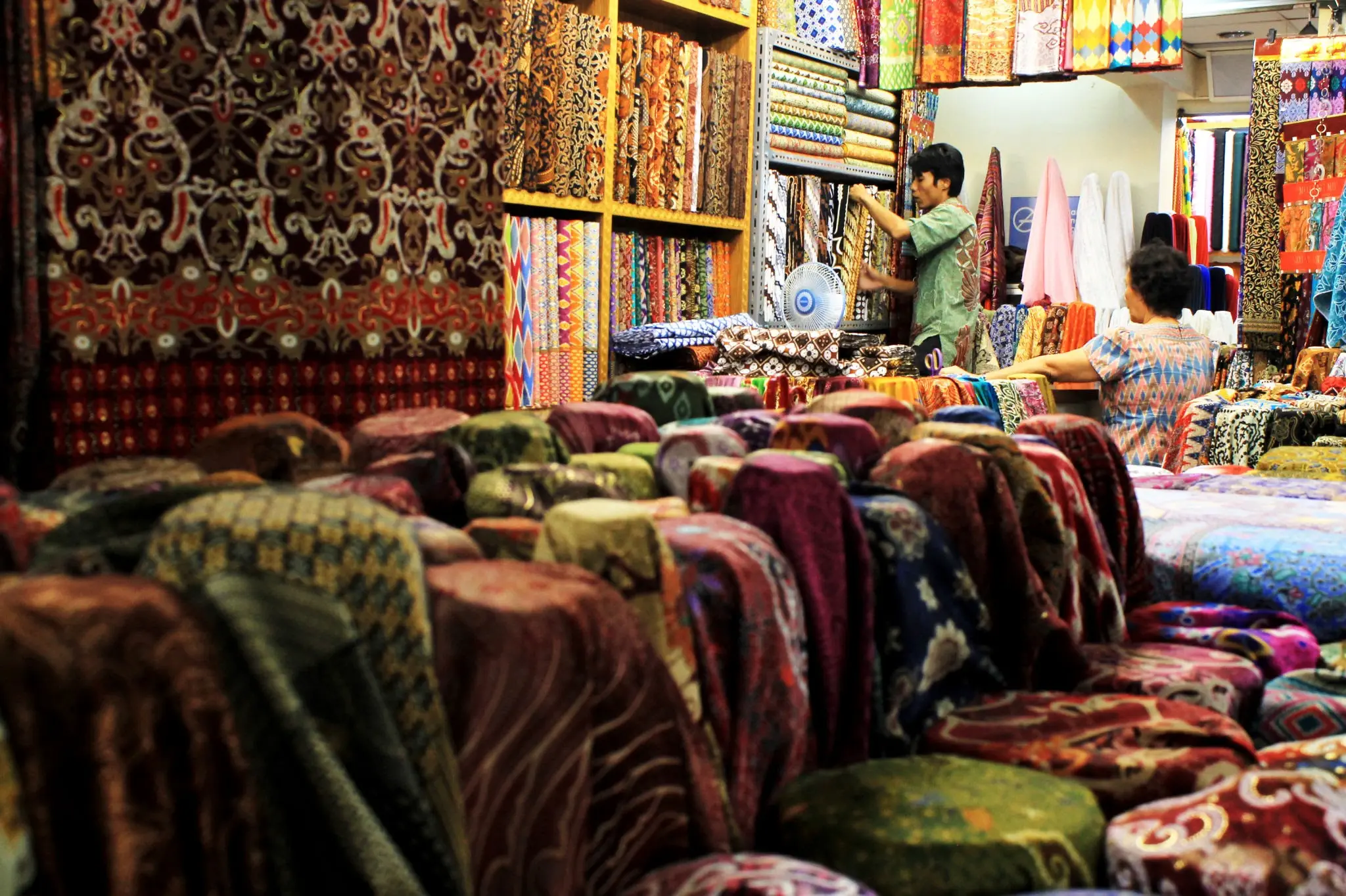
Indigenous entrepreneurs recognized this shift and began establishing their own perusahaan batik (batik enterprises) in Tanah Abang. They strategically synthesized the rigorous courtly processes of Solo and Yogya with the dynamic patterns of Pekalongan and Banyumas. Utilizing self-woven cloth and a mix of synthetic and natural dyes (such as bengkudu and turmeric), Tanah Abang transitioned from a localized market into the primary wholesale artery, funneling Javanese textiles across the Indonesian archipelago and beyond.
Sumatran Resilience: The Padang Blockade and the Revival of Natural Dyes
Perhaps the most extraordinary demonstration of the textile industry’s resilience occurred in West Sumatra during the turbulent 1940s. Long-standing consumers of Javanese batik, Minangkabau merchants faced severe textile shortages during the Japanese occupation and the subsequent Dutch economic blockades. Completely cut off from Tanah Abang’s supply lines while local demand surged, the merchants in Padang were forced to innovate.
Unable to import the sophisticated copper stamps from Java, Sumatran artisans retrofitted their production by meticulously carving indigenous wooden stamps. With pristine imported white cambric utterly unavailable, they ingeniously upcycled second-hand fabrics and local hand-woven textiles as their canvases.
More impressively, cut off from European synthetic dyes, these artisans resurrected ancient botanical extractions. Using localized materials like gambier, resin, turmeric, and mengkudu, they developed a striking, distinct palette dominated by bold black, yellow, red, and purple hues. By 1946, pioneers in the Sampan region, such as Bagindo Idris and Sidi Zokaria, had successfully localized Javanese patterns (like those from Indramayu and Solo) onto their textiles, predominantly producing sarongs.
By 1949, these entrepreneurs managed to circumvent the blockades entirely by routing materials from Singapore through Pekanbaru. This remarkable era proved that batik was no longer just a Mataram court tradition; it had become an unbreakable, Pan-Indonesian cultural and economic identity.
