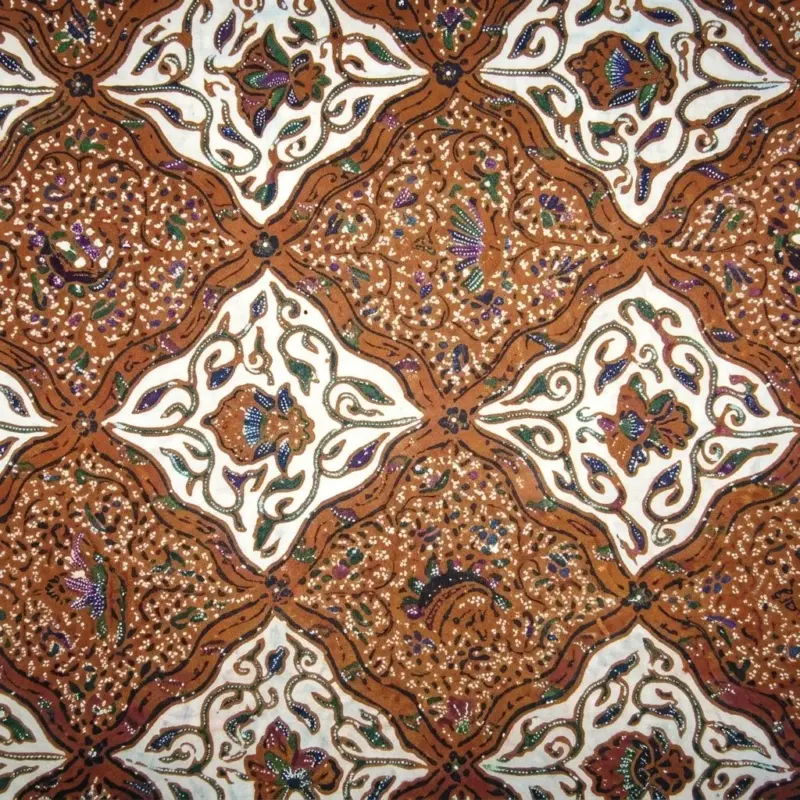
Long before it became a globally recognized fashion statement, batik was a sacred art form—a language woven into fabric. The history of batik is not just a timeline of textile production; it is the soul of Indonesian culture, carrying centuries of royal decrees, spiritual symbolism, and meticulous craftsmanship. At BatiksFabric.com, we don’t just source fabric; we preserve this heritage. Whether you are a textile enthusiast, a fashion designer, or simply captivated by intricate artistry, understanding the true origins of batik will forever change how you look at this masterpiece. Let’s unravel the threads of time to explore the authentic history of batik.
What is Batik? More Than Just a Printed Pattern
Batik is an ancient Indonesian wax-resist dyeing technique applied to whole cloth, where intricate patterns are hand-drawn or stamped using hot wax to prevent dye from penetrating the fabric. This meticulous process creates stunning, multi-layered designs that carry deep cultural significance, making authentic batik a revered form of wearable art rather than a simple printed textile.
To create these timeless textiles, highly skilled artisans utilize specialized, traditional tools. The most iconic of these is the canting—a small, pen-like instrument with a wooden handle and a tiny copper reservoir. The artisan uses the canting to meticulously trace fluid, continuous lines of liquid hot wax, known locally as malam, onto fine cotton or silk.
This wax acts as a protective, resistant barrier. When the fabric is submerged in a vibrant dye bath, the waxed areas retain their original color. To achieve complex, multi-colored tapestries, this labor-intensive process of waxing, dyeing, and boiling off the wax must be repeated flawlessly for every single color introduced to the cloth.
The Crucial Distinction: Real Batik vs. Batik Prints
As textile specialists at BatiksFabric.com, we frequently encounter a critical misconception in today’s fast-fashion market: the confusion between genuine batik and factory-printed batik motifs.
True, authentic handmade batik—known as Batik Tulis (literally translating to “written batik”)—is an intimate labor of love that requires weeks, or sometimes even months, of painstaking craftsmanship by a single artisan. Because the hot malam soaks completely through the textile fibers during the hand-drawing process, the mesmerizing pattern is perfectly reversible, appearing equally vibrant on both the front and the back of the cloth.
Conversely, modern screen-printed or digitally printed textiles merely mimic traditional Javanese motifs. These mass-produced fabrics press ink onto only one side of the cloth, entirely bypassing the sacred, centuries-old wax-resist process. Understanding this vital distinction between a factory print and a handcrafted Batik Tulis is the foundational first step in truly appreciating the rich history of batik fabric.
The Ancient Origins: Where Did the History of Batik Begin?
While the history of batik is intimately tied to the Indonesian archipelago, the fundamental concept of wax-resist dyeing is actually a global phenomenon with ancient roots. Archaeological evidence suggests that rudimentary forms of this resist-dyeing technique existed in ancient Egypt, where linen grave cloths found in tombs were coated in wax and scratched to create basic decorative lines. Similar early methods have also been traced back to the Indian subcontinent and the Tang Dynasty in China.
However, if the technique was born globally, it was undeniably perfected in Indonesia. Why did the island of Java become the undisputed epicenter of the highest form of this art?
The answer lies in a unique convergence of royal patronage, spiritual devotion, and rich indigenous botanical resources. While other ancient cultures eventually abandoned wax-resist dyeing in favor of faster weaving or printing methods, Javanese artisans leaned into the complexity. They invented the highly specialized canting tool, which allowed for a level of fluid, intricate detailing unseen anywhere else in the world. Furthermore, Java’s tropical environment provided the perfect natural ingredients—such as specific tree resins and beeswax—to create a superior malam (wax) that was flexible enough to prevent unwanted cracking, yet strong enough to resist the deepest indigo and earthy soga (brown) dyes. In Java, making batik evolved from a simple craft into a meditative, spiritual discipline.
The Etymology: What Does the Word “Batik” Mean?
To truly understand the history of batik, we must look at the name itself. The word “batik” is of Javanese origin, intricately combining two traditional words: amba, which translates to “to write,” and titik, which means “dot.”
Together, the word literally translates to “writing with dots.” This linguistic root perfectly encapsulates the meticulous, dot-by-dot, line-by-line process used by master artisans to map out complex motifs. It serves as a permanent historical reminder that authentic batik is never just printed—it is lovingly and painstakingly written onto the canvas of the cloth.
The Golden Age of Javanese Batik (13th – 16th Century)
The history of batik experienced a monumental renaissance between the 13th and 16th centuries. During this era, batik transitioned from a localized textile craft into a highly sophisticated, spiritual art form that defined the social hierarchy of the Javanese people.
The Majapahit Empire and Royal Patronage
During the reign of the Majapahit Empire (1293–1527)—one of the greatest and most powerful empires in Southeast Asian history—batik became intimately intertwined with Javanese royalty. Within the walls of the Kraton (the royal palace), crafting authentic Indonesian batik was considered a refined, meditative practice reserved primarily for aristocratic women, princesses, and female retainers.
The Kraton became the ultimate incubator for textile innovation. The patterns created here were not merely decorative; they were physical manifestations of philosophical teachings, power, and the Javanese cosmos. Because these designs carried immense spiritual weight, the royal court established the concept of “Forbidden Patterns” (known locally as Awisan Dalem or Batik Larangan).
These exclusive motifs were legally and culturally restricted, permitted to be worn only by the Sultan, his immediate family, and high-ranking nobility. The most famous of these forbidden designs is the Parang motif. Characterized by striking, sweeping diagonal S-shapes resembling a rugged blade or crashing ocean waves, the Parang symbolized ultimate power, resilience, and a leader’s duty to protect their people. For a commoner to wear a forbidden pattern like the Parang during this era was considered a severe transgression against both the crown and the natural spiritual order.
The Spread of Islam and Geometric Evolution
As the Majapahit Empire began to decline in the 15th and 16th centuries, the spread of Islam across the Indonesian archipelago sparked a fascinating visual evolution in the history of batik.
Prior to this period, Javanese batik heavily featured Hindu-Buddhist animistic elements, including literal depictions of gods, humans, and complex animal figures. However, the introduction of Islamic teachings brought the tenet of aniconism—the discouragement of creating literal representations of sentient, living beings to avoid idolatry.
Rather than abandoning their craft, traditional batik artisans brilliantly adapted. They transformed their aesthetic, shifting away from literal figures and pivoting toward highly intricate, stylized abstractions. Animals and mythical creatures were cleverly disguised within cascading floral tendrils (lung-lungan). More importantly, this religious shift gave birth to the stunning geometric and floral patterns that define many classic Javanese batiks today.
Masterpieces of symmetry like the Ceplok (repeated geometric rosettes) and the Kawung (intersecting circular medallions) flourished during this time. This brilliant fusion of pre-existing Javanese spiritualism and Islamic geometric discipline elevated batik into a remarkably sophisticated visual language—one that we still proudly preserve and curate at BatiksFabric.com.
Dutch Colonization and Global Expansion (19th Century)
As the Dutch colonial government established a firmer grip on the Indonesian archipelago in the 19th century, a fascinating cultural exchange took place. Rather than imposing European textiles onto the local population, the European colonizers—particularly Dutch and Eurasian women—fell profoundly in love with the exquisite beauty, breathability, and intricate artistry of Javanese batik.
This deep fascination birthed the distinct and highly collectible era of Batik Belanda (Dutch Batik). Elite European women began commissioning their own bespoke fabrics, seamlessly blending masterful Javanese wax-resist techniques with Western aesthetics. Traditional indigenous motifs were suddenly intertwined with European fairy tales, delicate lace-like borders, and vibrant, realistic floral bouquets known as buketan. This cross-cultural fusion transformed batik from a localized royal garment into a highly coveted fashion statement across European colonial high society, catching the eye of global textile merchants.
The Revolution of the Cap: Taking Batik to the World
As European and global demand for these magnificent textiles skyrocketed, Javanese artisans faced a critical challenge. The painstaking, dot-by-dot hand-drawing process of Batik Tulis was simply too slow for large-scale export
In the mid-19th century, a brilliant innovation revolutionized the history of batik: the introduction of the Cap (pronounced “chap”). The Cap is a complex, meticulously hand-crafted copper stamp. Artisans would dip this heavy copper block into boiling malam (wax) and firmly press it onto the fabric to create perfectly repeating patterns.
This invention was a monumental turning point for the industry. The
Cap drastically reduced production time from several months to just a few days, fundamentally transforming the textile economy of
Java. It allowed authentic Indonesian batik to be produced at a volume that could finally satisfy global export markets. However, it is crucial to note that stamping with a
Cap still required immense human skill, perfect wax temperature control, and a steady hand—ensuring that the soul of handmade craftsmanship remained entirely intact.
At BatiksFabric.com, we continue to celebrate this pivotal 19th-century innovation by offering both exquisite Batik Tulis and historically rich, authentic Batik Cap fabrics that honor this era of global expansion.
The Cultural Significance: Decoding Traditional Batik Patterns
In the realm of authentic Indonesian batik, there is no such thing as a random design. Every line, dot, and curve is deliberately placed to form a visual language. Historically, patterns were woven with prayers, ancient folklore, and deep philosophical values, acting as a non-verbal communicator of the wearer’s social status and life stage. When you wear genuine batik, you are quite literally draping yourself in centuries of storytelling.
Understanding this visual vocabulary is essential for collectors, designers, and enthusiasts. Below is a breakdown of some of the most historically significant motifs that continue to shape the batik landscape today:
| Motif Name | Origin | Visual Characteristics | Historical Meaning |
| Parang | Central Java | Diagonal, wave-like S-shapes | Power, resilience, and nobility. Once strictly reserved for royal families to signify an unbroken spirit. |
| Kawung | Yogyakarta | Four-lobed geometric circles | Purity, perfection, and the cosmos. Often associated with the palm fruit, representing emptiness of ego and a return to origin. |
| Megamendung | Cirebon | Cloud-like, vibrant colors | Patience, and the cooling down of anger. Deeply influenced by Chinese ceramics, it symbolizes a calm mind in turbulent times. |
At BatiksFabric.com, we believe that knowing the story behind the fabric transforms how you use it. Whether you are selecting a Kawung motif for a wedding to bless the couple with purity, or wearing a Parang to a business negotiation to channel leadership and resilience, decoding these traditional patterns allows you to connect with the history of batik on a profoundly personal level.
2009 to Present: UNESCO Recognition and Modern Era
The 21st century brought a defining milestone in the history of batik, cementing its status not just as a national treasure of Indonesia, but as a global cultural asset. On October 2, 2009, UNESCO officially designated Indonesian Batik as a Masterpiece of the Oral and Intangible Heritage of Humanity.
This prestigious recognition was awarded because batik is deeply intertwined with the cultural identity of the Indonesian people, symbolically marking every stage of life from birth to marriage to death. In honor of this historic declaration, October 2nd is now celebrated annually across the country as National Batik Day (Hari Batik Nasional), a day when Indonesians from all walks of life proudly wear their heritage on their sleeves.
From Traditional Wear to Global High Fashion
Following the UNESCO designation, the perception of batik experienced a dramatic renaissance. For decades, it was strictly viewed as formal, traditional attire—reserved primarily for weddings, royal ceremonies, and official government functions. Today, however, the history of batik is actively being rewritten by contemporary visionaries.
Authentic batik has successfully broken out of its traditional mold to dominate modern global fashion. You will now see these intricate, hand-waxed textiles gracing the runways of international haute couture, being transformed into sleek, modern office wear, and even being adapted into vibrant, edgy streetwear by young designers. The versatility of the fabric allows it to transcend generations and borders.
At BatiksFabric.com, we embrace this modern evolution while staying fiercely loyal to the traditional techniques. Our curated textiles empower modern fashion designers and creators to weave centuries-old Indonesian artistry into contemporary, fashion-forward silhouettes.
Expert Guide: How to Identify Authentic Batik Fabric
As textile purveyors deeply rooted in Indonesia’s textile heritage, one of the most common questions we receive is how to distinguish real batik from mass-produced imitations. With the global popularity of these traditional motifs, the market is unfortunately saturated with screen-printed fabrics masquerading as the real deal.
To ensure you are investing in a genuine piece of the history of batik rather than a factory imitation, follow our expert checklist. Here is how you can identify authentic Batik Tulis (hand-drawn) and Batik Cap (hand-stamped) fabrics:
Check the Reverse Side: This is the ultimate litmus test. Because the traditional wax-resist process involves fully submerging the cloth in dye baths, the colors on authentic batik bleed completely through the fibers. The front and back of the fabric should look nearly identical in color and vibrancy. If the reverse side is significantly faded, pale, or white, it is a one-sided machine print.
Look for Beautiful Imperfections: True craftsmanship always bears the mark of the human hand. In authentic Batik Tulis, you will notice slight, beautiful irregularities—a tiny drop of rogue wax, varying line thicknesses from the canting pen, or subtle asymmetrical details in the repeating patterns. Machine-printed fabrics possess a sterile, mathematically perfect symmetry that lacks the organic, breathing soul of real batik.
Smell the Fabric: Authentic batik engages all the senses, including smell. The rigorous process of boiling the fabric to melt away the malam (hot wax) leaves a distinct, lingering aroma. True batik often carries a faint, earthy scent of beeswax, tree resins, and natural dyes. In contrast, modern factory prints usually smell flat or carry the harsh scent of synthetic chemical inks.
Preserving the Legacy at BatiksFabric.com
At BatiksFabric.com, our connection to the history of batik runs far deeper than retail; it is a profound family legacy. Rooted in Pekalongan, Indonesia—a city globally revered as the vibrant heart of coastal batik artistry—our journey is built upon a foundation established by our grandfather in the 1930s. Today, operating under our historic family enterprise, Ambologo, we have spent nearly a century protecting and perfecting these ancestral methods, growing from a local workshop into a proud global exporter of premium textiles since 2010.
We believe that to truly honor the history of batik, we must sustain the communities that create it. We remain steadfastly committed to the exacting manual techniques of the past, working directly with highly skilled local artisans in Pekalongan to produce authentic Batik Tulis and Batik Cap on the finest cotton and rayon. By ensuring fair trade practices, ethical working conditions, and sustainable production, we empower our artisans to keep their cultural heritage alive. When you choose our fabrics, you are not just supporting a business; you are directly investing in the families and the generational knowledge that make this craft possible.
Explore our curated collection of authentic, handcrafted batik fabrics and own a piece of Indonesian history today.
Frequently Asked Questions (FAQ) About Batik History
Where did the history of batik originate? While early forms of wax-resist dyeing existed in ancient Egypt and China, the highly intricate art form known as batik was developed, perfected, and culturally embedded in Java, Indonesia.
What does the word batik mean? The term originates from traditional Javanese. It combines “amba” (meaning to write) and “titik” (meaning dot), literally translating to “writing with dots.”
What is the difference between batik tulis and printed batik? Authentic Batik Tulis is meticulously hand-drawn using hot wax and a canting pen, allowing dye to bleed perfectly to both sides of the fabric. Printed batik is mass-produced using machines that press synthetic ink onto only one side of the cloth.
What is the oldest known batik pattern? The Kawung (intersecting circles) and the Parang (diagonal, wave-like shapes) are considered among the oldest historical patterns, dating back to the 13th-century Majapahit Empire.
Why was the Parang motif forbidden? Historically, the Parang pattern was a “Forbidden Pattern” (Batik Larangan). It symbolized immense power, nobility, and resilience, and was strictly reserved for the Sultan and Javanese royalty.
How can you tell if batik fabric is authentic? To identify authentic batik, look at the reverse side of the fabric; the pattern should be equally vibrant on both sides. Additionally, genuine hand-crafted batik has slight, beautiful irregularities and often carries a faint, earthy scent of beeswax.

 Deutsch
 Español
 Français
 Nederlands
 Português
 Русский
 日本語
日本語 Bahasa Indonesia